How to check for bed bugs in a home & hotel room 2026
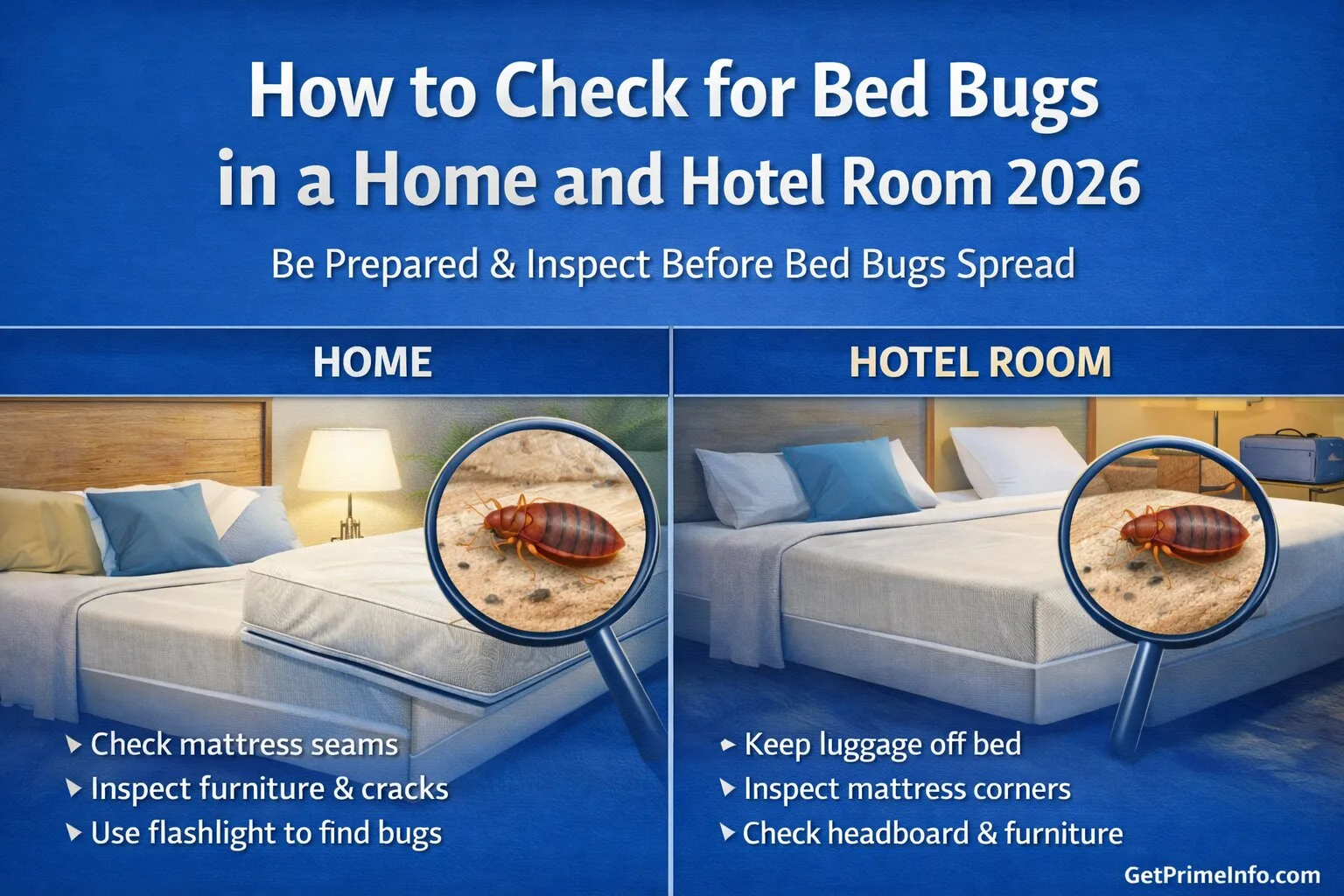
How to check for bed bugs begins with a slow and careful inspection of your sleeping area, mattress seams, and nearby furniture where these tiny insects hide. Look closely for live bugs, small dark stains, shed skins, and tiny white eggs along mattress edges, bed frames, and cracks in walls. Use a flashlight to check hidden corners and tight spaces. Early detection is important because bed bugs multiply quickly and spread through luggage, clothing, and furniture. A proper inspection helps confirm their presence before you begin any treatment or control method.
Table of Contents
Introduction to Bed Bugs
Bed bugs are tiny parasitic insects that feed on human blood, mostly at night while people sleep. They hide during the day and come out when the environment is dark and quiet. These pests do not fly or jump, but they crawl fast and move easily from one place to another through luggage, furniture, clothing, and bedding. Bed bugs can be found in homes, hotels, public transport, and even clean environments. Cleanliness does not prevent them because they are attracted to warmth and carbon dioxide, not dirt. Travel and second-hand furniture are common ways infestations begin. Understanding their behavior helps you detect and control them early before the problem becomes serious.
Bed Bugs’ Appearance and Life Cycle
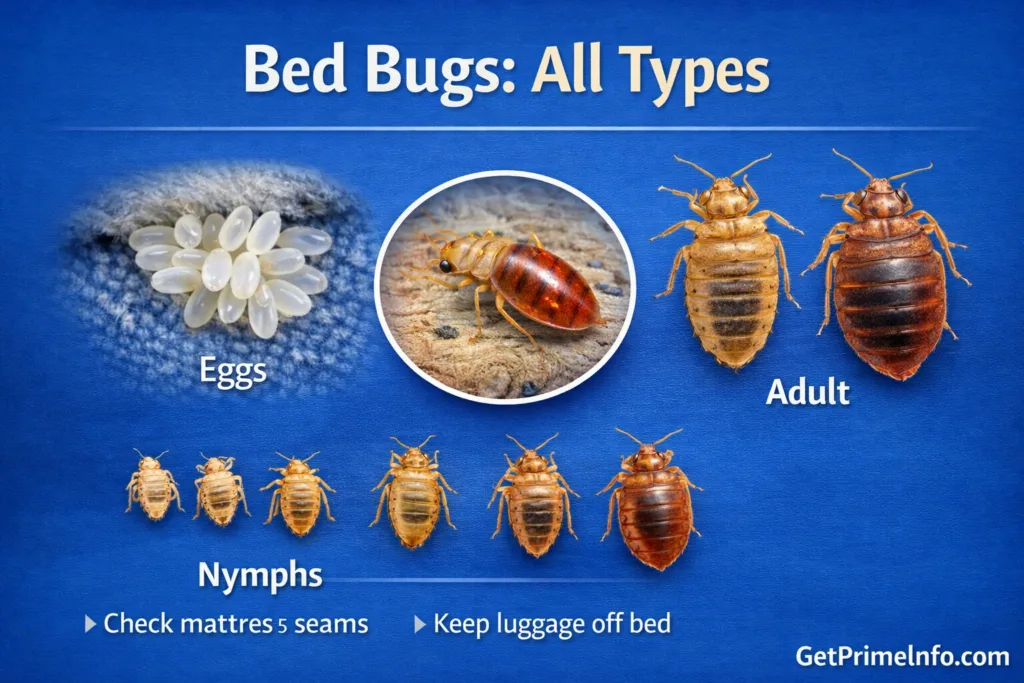
Bed bugs are small, flat, and oval insects roughly the size of an apple seed. Their color is usually brown, but after feeding on blood, they appear reddish and swollen. Young bed bugs, called nymphs, are smaller and lighter in color, which makes them harder to see. Bed bugs go through three main life stages: egg, nymph, and adult. The eggs are tiny, white, and often hidden deep inside mattress seams, cracks, and furniture joints. Eggs hatch within one to two weeks, and the young bugs begin feeding immediately. They grow quickly and shed their skin several times before becoming adults. A single female can lay hundreds of eggs during her lifetime, which is why infestations spread fast if not detected early.
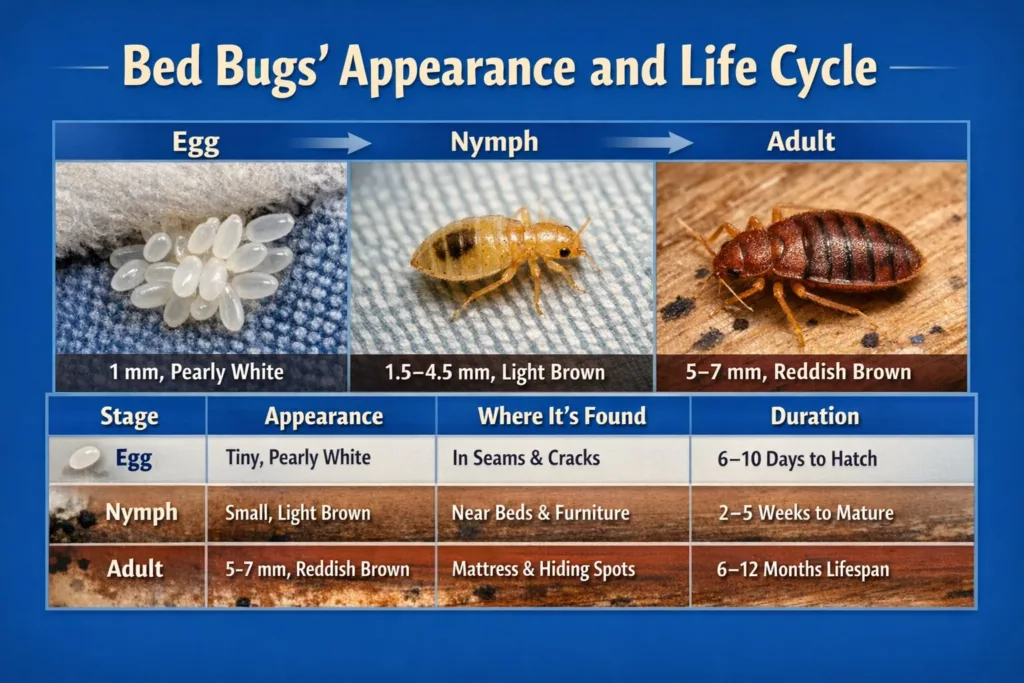
| Stage | Appearance | Size | Color | Where It Is Found | Duration | Key Behavior |
| Egg | Tiny, oval, smooth shell, hard to see with naked eye | About 1 mm | Pearly white | Hidden in mattress seams, cracks, furniture joints, and fabric folds | 6–10 days to hatch | Eggs are glued to surfaces and laid in clusters by female bed bugs |
| Nymph (Young Bed Bug) | Small, flat, looks like a mini adult but lighter | 1.5–4.5 mm (grows in stages) | Light yellow to pale brown, turns red after feeding | Near sleeping areas, mattress edges, bed frames, and hiding spots | 5 growth stages over 2–5 weeks | Must feed on blood to grow and shed skin after each stage |
| Adult Bed Bug | Flat, oval, apple-seed shape, visible to eye | About 5–7 mm | Brown, becomes reddish after feeding | Mattresses, bed frames, furniture cracks, walls, carpets, and hidden spaces | Can live 6–12 months (longer without feeding) | Feeds at night, hides during day, female lays hundreds of eggs |
Related Topics: How to Get Rid of Gnats: A Complete Step-by-Step Guide for Home & Plants
How to Find Bed Bugs in Your Home
Finding bed bugs requires patience and careful inspection. These insects prefer dark, tight spaces close to sleeping areas where they can feed easily. Start by checking the mattress seams, corners, and tags, as bed bugs often hide in these areas. Inspect the bed frame, headboard joints, and the area under the mattress. They may also hide behind picture frames, inside sofas, under cushions, behind electrical outlets, inside carpet edges, and in cracks along walls or floors. Using a flashlight helps you spot small bugs, eggs, and stains. Move slowly and inspect every small space carefully because bed bugs are experts at hiding.
Early Signs of Bed Bug Infestation
Early detection is the key to preventing a major infestation. One of the most common signs is small, dark, or black spots on mattresses and sheets, which are bed bug droppings. You may also notice tiny blood stains on bedding caused by crushed bugs after feeding. Shed skins, empty shells, and tiny white eggs are strong evidence of their presence. In heavy infestations, a sweet musty odor may be noticeable. Many people also experience itchy bites that appear in lines or clusters, but bites alone are not enough proof because other insects can cause similar marks. Always look for physical signs to confirm infestation.
Step-by-Step Bed Bug Inspection Process
A proper inspection should be slow and systematic. Begin by removing all bedding and examining the mattress carefully, especially along seams and corners. Inspect the bed frame, headboard, and joints because bed bugs hide in small cracks. Check behind wall decorations, clocks, and frames. Look inside sofas, cushions, curtains, and carpet edges. Inspect drawers, furniture joints, and areas around the bed. Finally, check luggage and clothing stored near sleeping areas. Regular inspection helps detect problems early and prevents their spread.
Common Mistakes People Make
- Ignoring early bite signs
- Only checking the mattress (bugs hide everywhere)
- Bringing unwashed travel clothes home
- Using random chemicals (can make the infestation worse)
How to Check for Bed Bugs in a Hotel
Hotels are one of the most common places where people encounter bed bugs, especially during travel. Before placing your luggage on the bed, inspect the mattress seams, headboard, and sheets carefully. Look for stains, eggs, or live bugs along mattress edges and corners. Check the sofa, chairs, luggage rack, and curtain folds because bed bugs often hide in these places. Keeping your luggage away from the bed until inspection is complete greatly reduces the risk of bringing bed bugs home.
Step-by-Step Hotel Room Inspection Protocol
When entering a hotel room, place your luggage in the bathroom first because bed bugs rarely hide there. Pull back the sheets and inspect the mattress seams and corners using a flashlight. Check the headboard and bed frame closely. Look for small dark stains, eggs, or bugs. Inspect nearby furniture, curtains, and luggage rack joints. If no signs are found, place luggage on the rack instead of the bed or floor. This simple inspection routine can prevent accidental infestation during travel.
What to Do If You Find Bed Bugs
If you discover bed bugs, act quickly but calmly. Avoid moving infested items to other rooms because this spreads the problem. Wash all clothing and bedding in hot water and dry them on high heat for at least thirty minutes because heat kills bed bugs and eggs. Vacuum mattresses, carpets, and furniture thoroughly, then seal and discard the vacuum bag. If the infestation is large, contact a professional pest control service because bed bugs are difficult to eliminate without proper treatment.
Getting Rid of Bed Bugs
Bed bugs are hard to remove because they hide deep and reproduce quickly. Effective treatment usually requires a combination of cleaning, heat treatment, and chemical control. Washing bedding in hot water, vacuuming frequently, and sealing cracks help reduce infestation. Professional extermination may involve heat treatment, which kills bugs at all life stages. Mattress encasements also help trap bugs and prevent new hiding places. Using multiple methods together increases success.
Do-It-Yourself Bed Bug Control
DIY methods can help control small infestations if applied consistently. Washing bedding and clothes in hot water and drying them at high temperature kills bugs and eggs. Vacuuming mattresses, carpets, and furniture removes many insects, while steam cleaning helps reach deep hiding areas. Sealing cracks and gaps reduces hiding spaces. Mattress encasements prevent bugs from entering or escaping. Repeating these steps regularly improves results, but severe infestations usually require professional help.
Pesticides to Control Bed Bugs
Chemical pesticides are sometimes used to control bed bugs, but they must be applied carefully and according to instructions. Common pesticide types include pyrethroids, neonicotinoids, desiccants like silica or diatomaceous earth, and insect growth regulators. Some bed bugs have developed resistance to certain chemicals, which reduces effectiveness. Improper pesticide use can be harmful, so always follow safety guidelines or seek professional advice for proper application.
Find a Bed Bug Pesticide Product & Search Tools
Many official pest control databases provide lists of approved bed bug pesticides. A Bed Bug Product Search Tool helps users find safe and registered products suitable for indoor use. Choosing the right product is important because unapproved chemicals may be ineffective or dangerous. Always read product labels and follow instructions carefully.
| Category | Description | Example / Tool | Notes |
| Pesticide Type | Different chemicals are used to kill bed bugs | Pyrethroids, Neonicotinoids, Desiccants, Insect Growth Regulators | Always choose products labeled for indoor use and bed bugs |
| Official Database | Government and health agencies list approved pesticides | EPA Bed Bug Product Search Tool | Ensures products are safe and registered |
| Search Features | Options to filter products by use and safety | Search by indoor/outdoor, chemical type, brand | Helps homeowners pick suitable options |
| Product Ratings | User or professional feedback on effectiveness | Reviews from pest control professionals or consumers | Check for resistance reports or complaints |
| Application Guidelines | How to safely use pesticides | Label instructions and professional recommendations | Follow dosage, safety, and protective measures |
| Local Availability | Where to buy approved products | Hardware stores, pest control suppliers, and online retailers | Verify EPA registration and intended use |
Bed Bug Information Clearinghouse
A Bed Bug Information Clearinghouse collects reliable research, pest control guides, and pesticide information to help homeowners and professionals. It provides verified resources on prevention, detection, and treatment methods. Information included in these clearinghouses is usually based on scientific research, government health agencies, and pest control experts, ensuring accuracy and safety.
Local Resources for Bed Bug Assistance
Local pest control professionals, public health departments, and housing authorities often assist with bed bug infestations. Professional inspection is useful when infestations are large or difficult to detect. Experts can identify hiding places, apply effective treatment, and provide prevention guidance.
Top 20 Tips to Prevent or Control Bed Bugs
Preventing bed bugs is easier than removing them. Regular inspection of beds and furniture helps detect problems early.
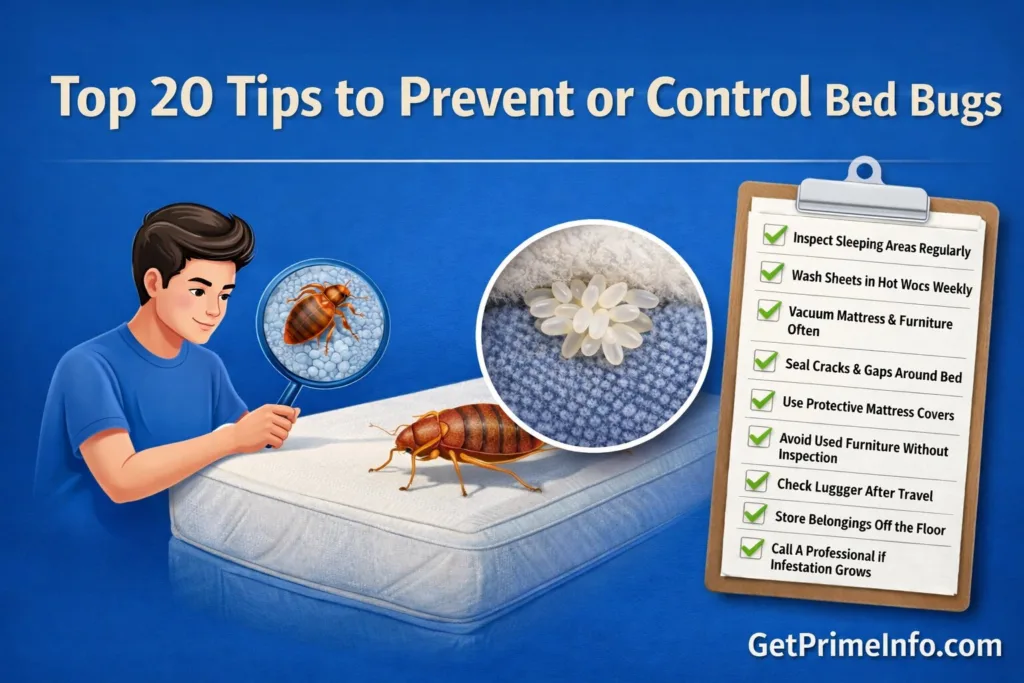
1. Inspect your mattress regularly – Check seams, edges, and tags for eggs, bugs, or droppings.
2. Wash bedding weekly – Use hot water and dry at high heat to kill bed bugs and eggs.
3. Vacuum frequently – Pay attention to carpets, mattresses, furniture seams, and corners.
4. Reduce clutter – Bed bugs hide in dark, tight spaces, so keep areas around the bed clean.
5. Use mattress and box spring covers – Protectors trap existing bugs and prevent new infestations.
6. Inspect second-hand furniture – Avoid bringing in used items without checking for bed bugs.
7. Keep luggage off beds in hotels – Use racks or hard floors to prevent transferring bugs to your room.
8. Store clothes in sealed bags during travel – This stops bed bugs from infesting your garments.
9. Wash and dry travel clothes immediately – Hot water and high heat kill any hitchhiking bugs.
10. Seal cracks and gaps – Close openings in walls, baseboards, and furniture where bugs hide.
11. Use bed bug interceptors – Place them under bed legs to trap bugs and monitor infestations.
12. Steam-clean furniture and mattresses – Heat kills bugs and eggs in deep cracks.
13. Check pets’ bedding – Pets can carry bed bugs into your home.
14. Inspect hotel rooms before unpacking – Check mattress seams, headboards, and furniture.
15. Avoid placing belongings on the floor in public spaces – Prevent bugs from crawling onto bags or shoes.
16. Educate family members – Teach signs of bed bugs and preventive practices.
17. Act immediately on sighting bugs – Early intervention stops infestations from spreading.
18. Use EPA-approved pesticides carefully – Only when needed, following the instructions exactly.
19. Monitor your home regularly – Use traps and inspections to catch early infestations.
20. Call professionals for severe infestations – Experts can safely remove large populations and prevent return.
Protecting Your Home from Bed Bugs
Protecting your home requires regular cleaning and inspection. Use protective mattress covers, vacuum frequently, and inspect furniture before bringing it inside. Sealing cracks and reducing clutter around sleeping areas helps eliminate hiding spaces. Routine monitoring ensures early detection and easier control.
Protecting Yourself from Bed Bugs in Public Places
Bed bugs spread easily through travel and public spaces. Avoid placing bags on public floors or beds, inspect seats in buses and cinemas, and keep luggage closed. Washing clothes after travel and inspecting hotel beds before use reduces the chance of bringing bed bugs home.
Bed Bugs as Public Health Pests
Bed bugs are not known to spread major diseases, but they can still affect health and well-being. Their bites cause itching, irritation, and sleep disturbance. In severe infestations, stress and anxiety are common. Some people experience allergic reactions. Although they are not major disease carriers, their impact on comfort and mental health makes them important public health pests.
Myths About Bed Bugs
Many myths exist about bed bugs. They do not only live in dirty homes, and they do not spread serious diseases. Most people cannot feel them biting because they inject a mild anesthetic. Bed bugs can infest furniture, walls, and carpets, not just beds. Cold weather alone does not kill them because they can survive in many conditions. Understanding facts helps in proper control.
The Bed Bug Iron Trick: Does It Work?
Some people believe using a hot iron on mattresses can kill bed bugs. While heat does kill bed bugs, ironing alone is not effective because these insects hide deep inside cracks and seams where iron cannot reach. Steam treatment is more effective because it penetrates deeper areas. Professional heat treatment remains one of the best methods for complete elimination.
Final Thoughts
Understanding how to check for bed bugs is the first step toward preventing a serious infestation. Careful inspection of mattresses, furniture, and hidden cracks helps you detect early signs like stains, eggs, and shed skins. Travel increases risk, so always inspect hotel rooms and luggage. Prevention is easier than treatment, so maintain cleanliness, wash bedding in hot water, and reduce clutter. Small infestations may be controlled with DIY methods, but severe problems often require professional help. Early detection, proper cleaning, and safe pest control practices are the best ways to protect your home and ensure peaceful sleep.
FAQs
1. How to detect bed bugs in a hotel?
To detect bed bugs in a hotel, inspect the mattress seams, corners, and tags. Check behind the headboard, under cushions, and near curtains. Look for tiny dark spots, shed skins, or eggs. Using a flashlight helps. Always keep luggage off the bed until you finish inspection.
2. What is the easiest way to check for bed bugs?
The easiest way is to examine the seams and edges of your mattress, box spring, and bed frame. Look for small dark spots, eggs, or shed skins. A magnifying glass or flashlight can help spot tiny nymphs. Checking luggage and clothing after travel is also important.
3. What kills bed bugs instantly in a hotel room?
Bed bugs die instantly under extreme heat. Using a portable steamer on mattress seams, bed frames, and upholstery works. Washing clothes in hot water and drying them at high temperatures also kills them. Pesticides labeled for indoor use can help, but instant chemical kills may not reach hidden bugs.
4. How would I know if the hotel I slept in had bed bugs?
Signs include itchy, red bites appearing after sleeping, tiny blood stains or black droppings on sheets, and shed skins in mattress seams. A musty odor is possible in heavy infestations. Inspecting your bedding and furniture after your stay confirms exposure.
5. How to check for bed bugs in a hotel with an iron?
Using an iron alone is not very effective. While heat can kill bed bugs on contact, an iron only reaches surface areas. Steam treatment is safer because it penetrates mattress seams and cracks. Ironing sheets before travel may kill exposed bugs, but won’t reach hidden ones.
6. Bed bug bites?
Bed bug bites usually appear as small, red, itchy bumps. They often appear in a line or cluster on exposed skin such as arms, legs, and neck. Some people may have no reaction at all. Scratching can cause secondary infections, so treat bites with anti-itch creams if needed.
7. Fair compensation for bed bugs in a hotel?
Hotels may offer compensation if bed bugs are found. This can include free nights, refunds, or reimbursement for laundry, clothing replacement, or medical expenses. Document the situation with photos and report immediately to hotel management for fair compensation.
8. How to check a hotel bed for bed bugs?
Pull back the sheets and inspect the mattress seams, corners, and tags. Check behind the headboard and under pillows. Look for dark spots, eggs, or shed skins. Use a flashlight to inspect crevices. Always keep luggage away from the bed until inspection is complete.
9. How to check a hotel for bed bugs?
Check the entire sleeping area: mattress, bed frame, headboard, sofa, and curtains. Examine luggage racks and surrounding furniture. Look for live bugs, droppings, shed skins, and eggs. Maintaining luggage in sealed bags reduces risk.
10. Can bed bugs live in clean hotels?
Yes. Bed bugs are attracted to warmth and carbon dioxide, not dirt. Even new or clean hotels can have infestations if previous guests brought them in. Always inspect before settling in.
11. Can bed bugs transmit diseases?
No, bed bugs are not known to spread serious diseases. However, their bites cause itching, skin irritation, and can lead to secondary infections if scratched. Psychological effects like anxiety and sleep loss are common in heavy infestations.
12. How long can bed bugs survive without feeding?
Bed bugs can survive for months without a blood meal, depending on temperature. Adults may live 6–12 months without feeding, and nymphs can survive several weeks. This is why early detection is critical.
13. Can you see bed bugs with the naked eye?
Yes. Adult bed bugs are about 4–6 mm long, oval, and reddish-brown. Eggs and nymphs are smaller and lighter in color, making them harder to see. A flashlight or magnifying glass is helpful for detection.
14. What areas should I inspect first in a hotel room?
Start with the bed: mattress seams, corners, tags, and headboard. Then check nearby furniture, sofa seams, luggage racks, curtains, and carpet edges. Avoid placing luggage on the bed until inspection is complete.
15. Are bed bugs more common in hotels than in homes?
Bed bugs can appear anywhere people sleep, including homes, apartments, and hotels. Hotels are often at higher risk because they have frequent turnover of guests from different areas. Travel increases the chance of exposure, but infestations can occur anywhere.