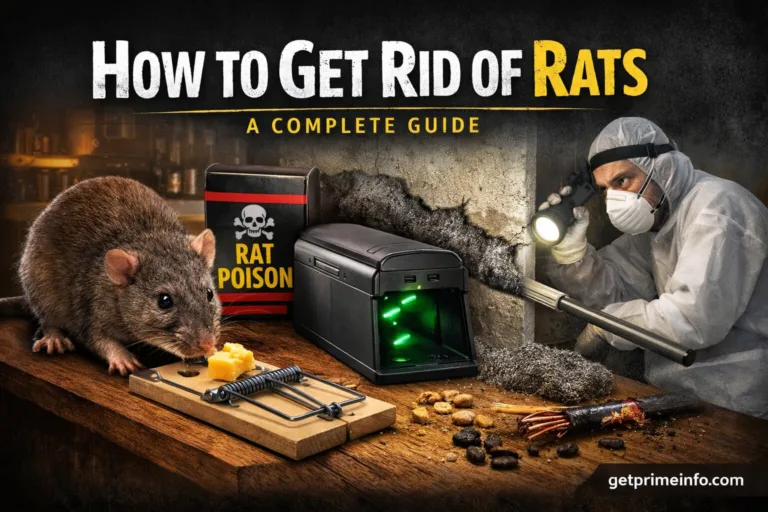
How to Get Rid of Mice: Complete Step-by-Step Guide 2026

How to get rid of mice starts with finding entry points, removing food sources, and using traps or natural repellents to stop their activity. Mice enter homes searching for warmth, food, and shelter. Seal cracks, clean food spills, and set traps in hidden areas like corners, cupboards, and behind appliances. Natural options like peppermint oil, pepper, and strong smells can repel mice, while proper sanitation prevents their return. Acting early is important because mice multiply quickly and spread contamination. A complete control plan combines cleaning, blocking entry, trapping, and long-term prevention.

Table of Contents
Understanding Mice and Why They Enter Homes
Mice are highly adaptable rodents that survive easily in human environments. They enter homes primarily in search of food, warmth, and shelter. During colder months, indoor spaces become ideal nesting locations. Even tiny openings around doors, pipes, vents, or foundations can allow mice to enter.
A mouse can squeeze through a hole as small as a coin. Once inside, they quickly build nests using paper, fabric, insulation, or soft materials. Mice reproduce rapidly, and a small problem can turn into a large infestation within weeks. Understanding why mice enter homes helps homeowners stop the issue early before serious contamination or damage occurs.
Signs of a Mouse Infestation
Early detection is key to preventing major problems. Here are the most common signs of mice:
Common Indicators
- Small black droppings near food areas, cupboards, and hidden corners
- Scratching or scurrying sounds at night inside walls or ceilings
- Gnaw marks on wires, furniture, cardboard, and food packaging
- Shredded paper, cloth, or insulation used for nesting
- Musky, unpleasant odor in heavily infested areas
- Grease marks or dark rub marks along walls (mouse travel paths)
If you notice even one of these signs, take action immediately to prevent rapid multiplication.
How to Identify Mouse Droppings and Dispose of Them Safely
Mouse droppings are one of the clearest signs of infestation.
Identification
- Small, dark, and rice-shaped
- Fresh droppings: soft and shiny
- Old droppings: dry and crumbly
Safe Disposal Steps
- Never sweep or vacuum dry droppings (can spread harmful particles).
- Wear gloves and a face mask.
- Spray droppings with disinfectant or bleach solution.
- Wait 5 minutes before cleaning.
- Use paper towels to wipe and collect waste.
- Seal waste in a plastic bag and dispose of it safely.
- Wash your hands thoroughly after cleaning.
Proper disposal prevents contamination and protects health.
Health Risks Linked to Mice
Mice are not just a nuisance — they pose real health and safety risks.
Major Risks
- Spread bacteria through droppings, urine, and saliva
- Contaminate food and kitchen surfaces
- Trigger allergies and asthma
- Damage electrical wiring (fire hazard)
- Carry parasites like fleas and mites
Even a small infestation can affect hygiene and health, so quick removal is essential.
Understanding the Habits and Behavior of Mice
Knowing mouse behavior helps you control them more effectively.
Mouse Behavior Facts
- Nocturnal: most active at night
- Prefer dark, quiet hiding places
- Travel along walls and edges
- Follow the same path repeatedly
- Eat small amounts multiple times daily
- Prefer grains, seeds, and sugary foods
- Reproduce rapidly throughout the year
Understanding these habits helps in placing traps correctly and targeting problem areas.
Step-by-Step Plan to Eliminate Mice
Follow this proven step-by-step method for complete mouse removal:
Step 1: Inspect Your Home
Check walls, doors, pipes, vents, and foundations for cracks or holes.
Step 2: Seal Entry Points
Use steel wool, caulk, cement, or metal mesh to block all openings.
Step 3: Remove Food Sources
Store food in airtight containers and clean crumbs immediately.
Step 4: Set Traps
Place traps:
- Along walls
- Behind appliances
- Near droppings
- In cupboards and hidden corners
Step 5: Clean and Sanitize
Disinfect droppings, nests, and contaminated areas properly.
Step 6: Monitor Continuously
Continue checking until no signs remain.
Consistency is the key to full elimination.
How to Get Rid of Mice Naturally
Natural solutions work well for small infestations and prevention.
Natural Control Methods
- Remove food and water sources
- Keep kitchen and storage areas clean
- Reduce clutter and hiding spots
- Use strong natural scents like peppermint oil or vinegar
- Maintain regular inspection and monitoring
Natural methods are safe but work best when combined with sealing entry points.
Live Catch and Release Mouse Traps
Humane traps capture mice without killing them.
How to Use
- Place traps near walls or droppings
- Check traps frequently
- Release mice far from your home
- Choose natural outdoor areas
Humane traps are useful for small infestations but may not stop larger problems.
Natural Repellents That Help Keep Mice Away
Certain smells naturally discourage mice.
Ammonia Smell
Mimics predator urine and scares mice away.
Capsaicin (Pepper)
Irritates mice and prevents entry into treated areas.
Pets (Cats and Dogs)
Their scent and presence naturally deter mice.
Peppermint Oil
Strong smell disliked by mice. Soak cotton balls and place near entry points.
Natural repellents must be refreshed regularly for effectiveness.
Tips to Mouse-Proof Your Home
Prevention is easier than removal.
Mouse-Proofing Tips
- Seal cracks and holes in walls and floors
- Install door sweeps and repair screens
- Store food in airtight containers
- Clean spills and crumbs immediately
- Keep garbage bins sealed
- Reduce clutter and nesting materials
- Trim vegetation near walls
- Keep storage areas organized
- Inspect regularly for early signs
Preventive measures greatly reduce infestation risk.
Cleaning and Sanitizing After Mice
After removal, deep cleaning is essential.
Cleaning Steps
- Disinfect floors, cupboards, and surfaces
- Wash contaminated fabrics in hot water
- Remove and replace heavily infested materials
- Eliminate odors and bacteria
- Maintain a regular cleaning schedule
Proper sanitation discourages mice from returning.
Recommended Mouse Control Tools and Products
Different tools help manage infestations effectively.
Common Tools
Snap Traps – Quick and reliable
Electronic Traps – Instant kill using electric shock
Glue Traps – Capture mice, but less humane
Ultrasonic Repellers – Mixed effectiveness
Natural Repellents – Helpful for prevention
Sealants & Mesh – Block entry points
Always choose safe, approved products for indoor use.
Mouse Control Products Comparison Table
| Product Type | How It Works | Effectiveness | Reusable | Safety Level | Best For | Pros | Cons |
| Snap Mouse Trap | Spring-loaded bar kills a mouse instantly when triggered | High (70–90%) | Sometimes | Moderate | Small to medium infestations | Cheap, fast, widely available | Needs careful placement, not pet-safe |
| Electronic Mouse Trap | Uses electric shock to kill the mouse quickly inside the chamber | Very High (90–100%) | Yes | High | Indoor home use | Humane, no-touch disposal, clean | Expensive, needs batteries |
| Live Catch (Humane) Trap | Captures a mouse alive for release outdoors | Medium (70–80%) | Yes | High | Humane control | No killing, eco-friendly | Mice may return, slower results |
| Glue Trap / Glue Board | A sticky surface traps a mouse when stepped on | Medium–High (70–85%) | No | Low | Monitoring and light infestations | Cheap, silent, easy to use | Inhumane, requires frequent checking |
| Ultrasonic Pest Repeller | Emits high-frequency sound to repel mice | Variable | Yes | High | Prevention and light activity | Chemical-free, easy setup | Results vary, not reliable alone |
| Steel Wool + Sealant | Blocks entry holes physically | Preventive | N/A | High | Long-term prevention | Stops mice from entering | Does not remove existing mice |
| Multiple-Catch Trap | Captures several mice without resetting | Medium | Yes | Moderate | Heavy infestations | Handles many mice | Needs monitoring |
When to Call Professional Pest Control
Professional help is necessary when:
- Infestation is large or spreading
- Mice keep returning
- Hidden nests cannot be found
- DIY methods fail
Pest control experts use advanced techniques, identify nesting areas, and provide long-term prevention.
Related Topics: How to Get Rid of Gnats: A Complete Step-by-Step Guide for Home & Plants
Final Thoughts
Learning how to get rid of mice helps protect your home from contamination, damage, and health risks. Early detection, proper cleaning, and sealing entry points are essential. Natural repellents and traps work well for small infestations, while larger problems may require professional pest control. Maintaining hygiene, removing clutter, and storing food properly prevent mice from returning. Since mice reproduce quickly, consistent monitoring and prevention are critical. A comprehensive strategy that combines trapping, sanitation, sealing, and prevention ensures a clean, safe, and mouse-free home.
FAQs
1. What is the fastest way to get rid of mice in a house?
The fastest way is to combine snap traps, sealing entry points, and removing food sources. Traps reduce the population immediately, while sealing and sanitation prevent new mice from entering.
2. What attracts mice to homes the most?
Mice are attracted to food crumbs, pet food, garbage, clutter, warmth, and small entry gaps. Even a hole the size of a coin is enough for a mouse to enter.
3. Are mice dangerous to humans?
Yes. Mice can spread diseases, contaminate food, trigger allergies, and damage wiring, which increases fire risk.
4. Do natural remedies really work for mice?
Natural remedies like peppermint oil, cloves, and vinegar may repel mice temporarily, but they do not eliminate infestations. They work best as prevention, not a standalone solution
5. What is the best mouse trap in 2026?
In 2026, reusable snap traps and smart electronic traps are considered the most effective due to their speed, humane kill, and high success rate.
6. How long does it take to completely get rid of mice?
With proper trapping and prevention, most infestations can be controlled in 1–3 weeks. Severe infestations may take longer if structural gaps are not sealed.
7. Can mice come back after extermination?
Yes. Mice will return if entry points remain open or food sources are accessible. Long-term success depends on exclusion and cleanliness.
8. Is it better to use poison or traps?
Traps are safer and more effective. Poison can cause mice to die inside walls, creating odor problems and posing risks to pets and children.
9. How do I find where mice are entering my house?
Look for droppings, gnaw marks, grease trails, and holes near foundations, pipes, vents, and doors. Night activity noises are also a strong indicator.
10. What smells do mice hate the most?
Mice strongly dislike peppermint oil, ammonia, cloves, cayenne pepper, and mothballs. These scents can help deter mice when used correctly.
11. When should I call a professional pest control service?
Call a professional if mice persist after two weeks of trapping, if droppings are widespread, or if mice are found in walls, ceilings, or insulation.
12. How can I prevent mice from coming back permanently?
Permanent prevention requires sealing all entry points, storing food in airtight containers, decluttering, and regular inspections of your home.