How to Get Rid of Rats: A Complete guide 2026
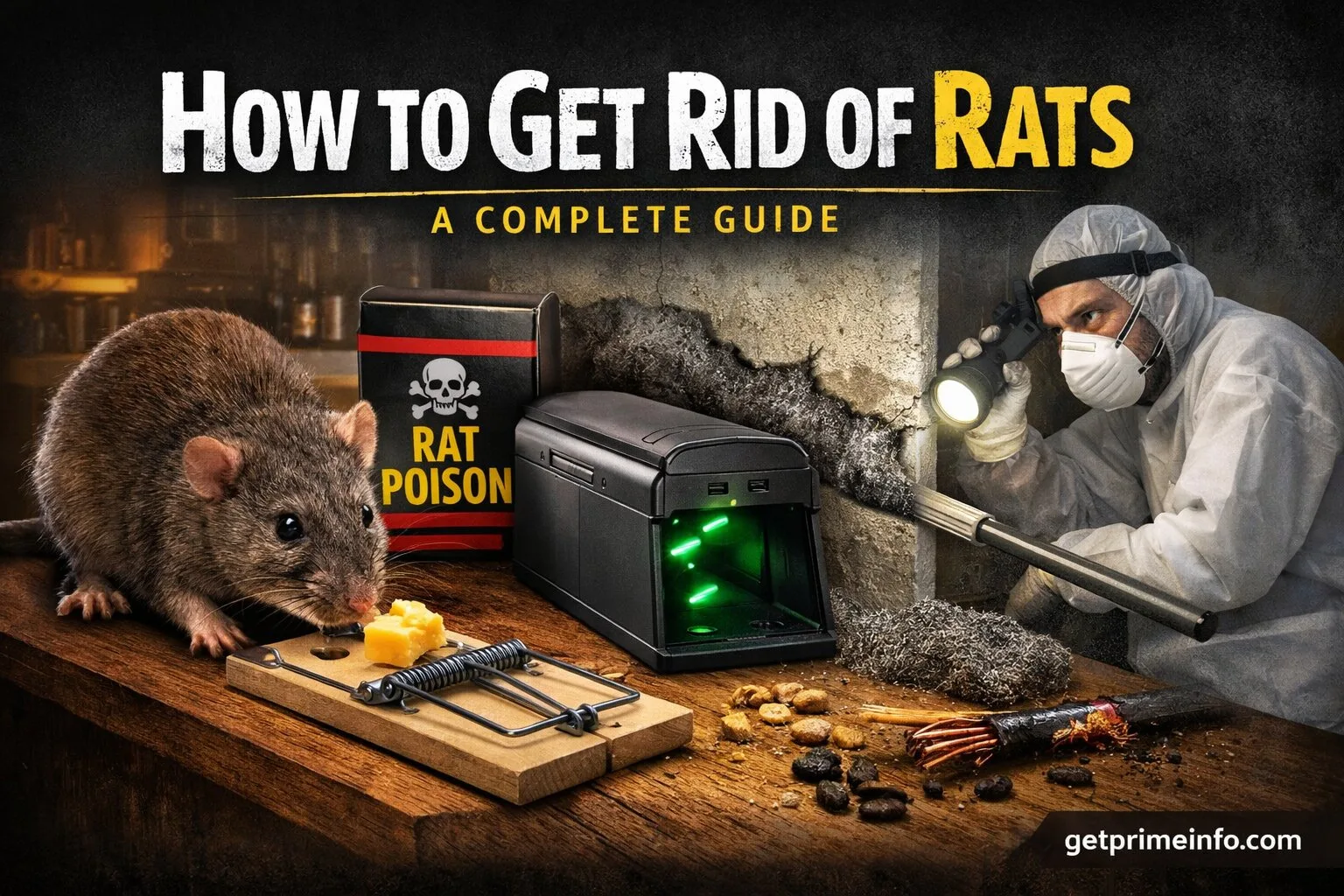
How to get rid of rats effectively means understanding why they enter your space, removing everything that attracts them, blocking their access points, and choosing the right control methods. Rats are intelligent, cautious, and fast breeders. If even one key step is skipped, they often return. This guide explains every step clearly so you can remove rats and keep them away for good.
Table of Contents
Why Rats Are a Serious Problem You Should Not Ignore
Rats are not harmless pests. They cause real damage to health, property, and safety.
Rats carry bacteria, viruses, and parasites that can spread through their droppings, urine, saliva, and fur. These contaminants can land on kitchen surfaces, stored food, and cooking tools, increasing the risk of illness.
They also chew constantly to keep their teeth short. This behavior leads to damaged electrical wires, insulation, wooden beams, and plumbing pipes. Chewed wires are a common cause of house fires linked to rodent infestations.
Another major issue is rapid reproduction. A small rat problem can turn into a large infestation within a few months if left untreated.
Clear Signs That You Have Rats in Your Home & Hotel
Most homeowners notice rats through indirect signs rather than seeing them directly.
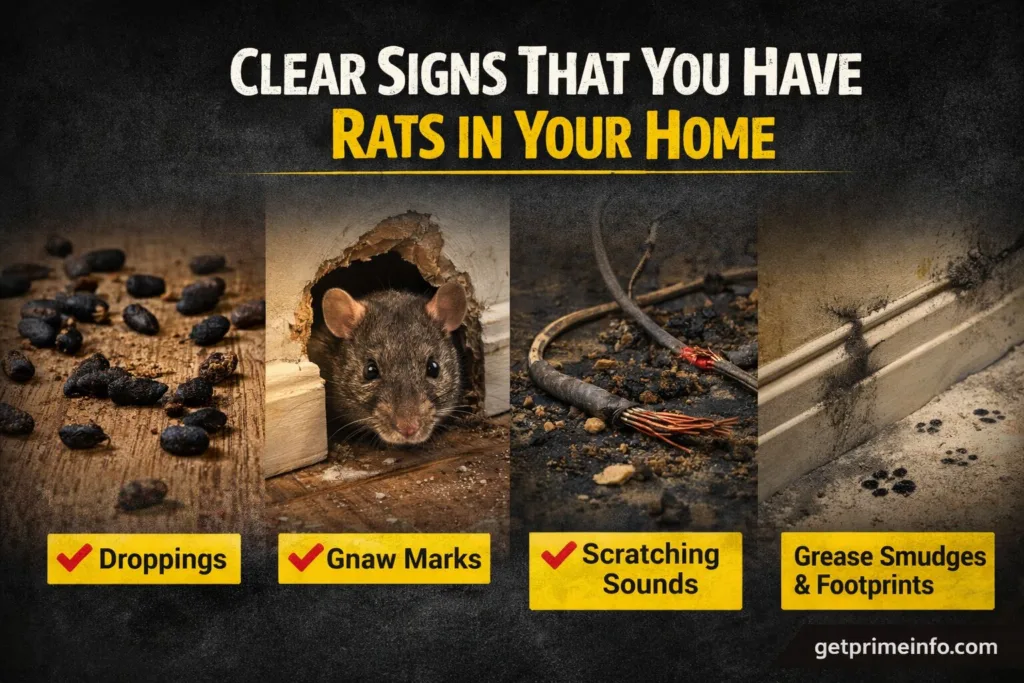
Rat droppings are usually dark, capsule-shaped, and found near food storage areas, along walls, or inside cabinets. Fresh droppings are soft and shiny, while older ones are dry and crumbly.
Noises at night, such as scratching, gnawing, or running sounds, often indicate rats moving inside walls, ceilings, or attics. Rats are nocturnal, so activity increases after dark.
Gnaw marks on wires, furniture, doors, or food packaging suggest rats are actively feeding and nesting nearby. These marks often appear rough and uneven.
Grease marks and footprints may appear along baseboards and floors. Rats leave oily residue from their fur as they travel the same paths repeatedly.
Related Topics: How to Get Rid of Mice: Complete Step-by-Step Guide 2026
Where Rats Come From and How They Get Inside
Rats are skilled at finding weak spots in buildings.
They enter homes through small cracks in foundations, gaps under doors, damaged vents, roof openings, and spaces around utility pipes. Even a hole as small as half an inch is enough for a rat to squeeze through.
Outdoor conditions also play a role. Poor waste management, cluttered yards, overgrown vegetation, and nearby food sources encourage rats to nest close to buildings and eventually move indoors.
Older homes and poorly maintained structures are especially vulnerable because small gaps often go unnoticed.
Common Types of Rats Found in Homes
Understanding the type of rat helps determine where to focus control efforts.
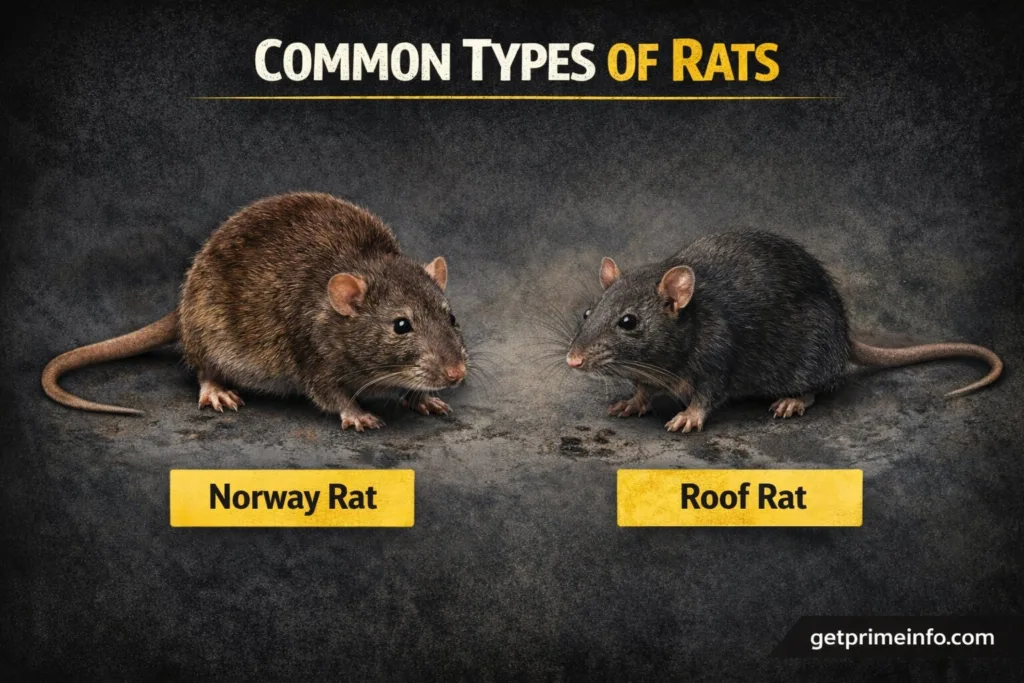
Norway rats are large and heavy-bodied. They usually live at ground level, burrowing in soil near foundations or nesting in basements and crawl spaces. They are poor climbers but strong diggers.
Roof rats are smaller and more agile. They prefer high places such as attics, roofs, and upper floors. These rats are excellent climbers and often enter homes through trees or overhead wires.
Both types cause damage, but their nesting locations differ.
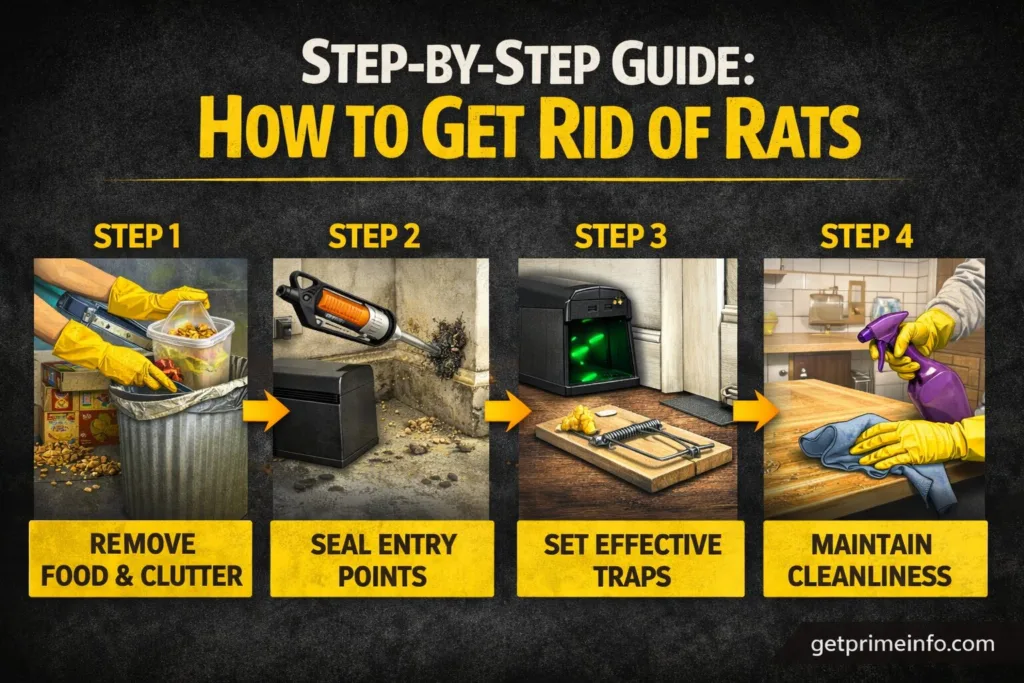
Step 1: Remove Food, Water, and Shelter Completely
This is the most important step in rat control. Traps and deterrents fail when rats still have easy access to resources.
Food Control (Detailed)
Rats are attracted to even tiny food sources. Crumbs under appliances, open pet food bowls, and loosely sealed pantry items provide enough nutrition to keep rats alive. Store all food in thick, airtight containers made of metal or hard plastic. Clean kitchen surfaces daily, wipe spills immediately, and never leave food out overnight.
Water Control (Detailed)
Rats need water to survive. Leaking pipes, dripping faucets, pet water bowls, and condensation around appliances provide constant hydration. Fix all leaks, dry sinks before bed, and remove standing water indoors and outdoors. Cutting off water sources makes your home less livable for rats.
Shelter Reduction (Detailed)
Cluttered spaces give rats places to hide and nest. Piles of cardboard, unused storage boxes, wood stacks, and dense vegetation offer warmth and protection. Clear clutter, organize storage areas, and move firewood and debris at least 20 feet away from your home to reduce nesting opportunities.
Step 2: Seal Entry Points and Block All Access
Blocking entry points prevents new rats from entering after removal.
Use durable materials such as steel wool, metal flashing, hardware cloth, cement, or mortar. Rats can chew through foam, plastic, and wood, so these materials alone are not reliable.
Inspect your home carefully, focusing on foundations, rooflines, vents, garages, basements, and areas where pipes enter walls. Even small gaps should be sealed immediately to prevent reinfestation.
Step 3: Choose the Right Rat Control Method
Different situations require different control methods. The goal is fast removal with minimal risk.
The most common methods include traps, poison, natural deterrents, and professional pest control services. For most homes, traps are the safest and most effective option.
Rat Traps Explained in Detail
Snap Traps
Snap traps kill rats quickly when triggered. They are affordable, widely available, and effective when placed correctly. Position them along walls where rats travel, with the bait side facing the wall. Use gloves to avoid leaving human scent, which may deter rats.
Electronic Traps
Electronic traps deliver a quick electric shock that kills rats instantly. They are cleaner to use and prevent direct contact with the rodent. These traps are more expensive but work well indoors where hygiene is important.
Live Traps
Live traps capture rats without killing them. However, releasing rats elsewhere is often illegal and does not solve the problem long-term. Handling live rats also increases the risk of bites and disease exposure.
Using Rat Poison: Why It Is Risky
Rat poison may seem convenient, but it creates serious problems.
Poisoned rats often crawl into walls or hidden spaces before dying. This leads to strong odors, maggots, and difficult cleanup. Poison also poses a high risk to pets, children, and wildlife through accidental ingestion or secondary poisoning.
Because of these risks, poison should only be used by trained professionals under controlled conditions.
Natural and Home Remedies That Can Help
Natural remedies work best as supportive measures, not primary solutions.
Strong smells like peppermint oil, ammonia, cloves, and cayenne pepper may discourage rats from specific areas. These scents can help after rats are removed but will not eliminate an active infestation on their own.
Consistency is required, and results vary.
How to Get Rid of Rats in Walls and Ceilings
Rats inside walls are difficult to handle without a plan.
Start by identifying where the rats are entering. Place traps near wall openings, attic access points, or ceiling voids where activity is heard. Avoid poison, as it often causes rats to die inside walls.
Once rats are removed, seal all access points to prevent reentry. Persistent wall activity often requires professional help.
Outdoor Rat Control and Yard Prevention
Outdoor rat populations often lead to indoor infestations.
Keep yards clean and free of debris. Secure garbage bins with tight lids and avoid leaving pet food outside. Trim tree branches that touch roofs, as rats use them as bridges to enter homes. Fill visible burrows with gravel or soil after confirming rats are gone.
How Long Does It Take to Get Rid of Rats
The time required depends on the infestation size and the consistency of effort.
Small infestations may be controlled within one to two weeks. Larger infestations often take several weeks to months. Skipping exclusion steps usually leads to delays and reinfestation.
When to Call a Professional Exterminator
Professional pest control is recommended when rats persist despite trapping, when activity is widespread, or when rats are inside walls or ceilings. Businesses, rental properties, and homes with health risks should seek professional help immediately.
Experts use integrated pest management methods for long-term success.
Preventing Rats From Coming Back Permanently
Prevention is ongoing.
Regular inspections, proper food storage, sealing new gaps, and maintaining cleanliness are essential. Rats return when conditions become favorable again, so consistency is key to long-term control.
Final Thoughts: The Right Way to Get Rid of Rats
Learning how to effectively eliminate rats requires patience, planning, and follow-through. Traps remove rats quickly, exclusion keeps them out, and sanitation removes attraction. Poison creates more problems than it solves for most homes. Natural deterrents help with prevention, but cannot replace proper control. When infestations are severe or persistent, professional help is the safest solution. With the right approach, rats can be eliminated and kept away permanently.
FAQs
1. How do you get rid of rats fast?
The fastest way to get rid of rats is to use snap traps in high-activity areas, remove all food sources, and seal entry points at the same time. Traps reduce the population quickly, while sanitation and sealing prevent new rats from entering.
2. What is the most effective method to kill rats?
Snap traps and electronic traps are the most effective and humane methods. They kill rats instantly when placed correctly along walls and near nesting areas.
3. What do rats hate the worst?
Rats strongly hate peppermint oil, ammonia smells, cayenne pepper, cloves, and strong chemical odors. These scents irritate their sensitive noses and can help keep them away from treated areas.
4. What human food is poisonous to rats?
Some human foods that are toxic to rats include chocolate, caffeine, alcohol, raw beans, onions, and citrus peels. These should never be used as bait due to unpredictable and unsafe results.
5. How do you permanently keep rats away?
To permanently keep rats away, you must seal all entry points, store food in airtight containers, maintain cleanliness, remove clutter, and monitor your home regularly for new gaps or activity.
6. Can rats go away on their own?
No. Rats rarely leave on their own as long as food, water, and shelter are available. Without active control, infestations usually grow larger over time.
7. Is rat poison a good solution?
Rat poison is not recommended for most homes because poisoned rats often die inside walls, causing strong odors and attracting insects. It also poses serious risks to pets and children.
8. How long does it take to get rid of rats completely?
Small infestations can be controlled within 1–2 weeks, while larger infestations may take several weeks to months, depending on control methods and how well entry points are sealed.
9. Do natural remedies really work against rats?
Natural remedies can repel rats temporarily, but they do not eliminate an infestation. They work best as preventive tools after rats have already been removed.
10. Where should rat traps be placed for best results?
Rat traps should be placed along walls, behind appliances, near droppings, and close to entry points, with the bait side facing the wall where rats usually travel.
11. Are rats dangerous to humans?
Yes. Rats can spread diseases, contaminate food, trigger allergies, and cause structural damage. Their droppings and urine can pose serious health risks.
12. How can I tell if rats are gone?
Signs rats are gone include no new droppings, no scratching sounds at night, no gnaw marks, and traps remaining untouched for several consecutive days.
13. Do rats come back after extermination?
Rats can return if new entry points appear or food sources become available again. Long-term prevention is essential to stop reinfestation.
14. When should I call a professional rat exterminator?
You should call a professional if rats are inside walls, activity continues after two weeks of DIY control, or the infestation is widespread, especially in businesses or rental properties.
15. What is the best way to prevent rats in the future?
The best prevention strategy includes regular inspections, sealing gaps quickly, proper waste management, food storage, and keeping indoor and outdoor areas clean and clutter-free.