Division of Health Sciences 2026: A Complete Guide
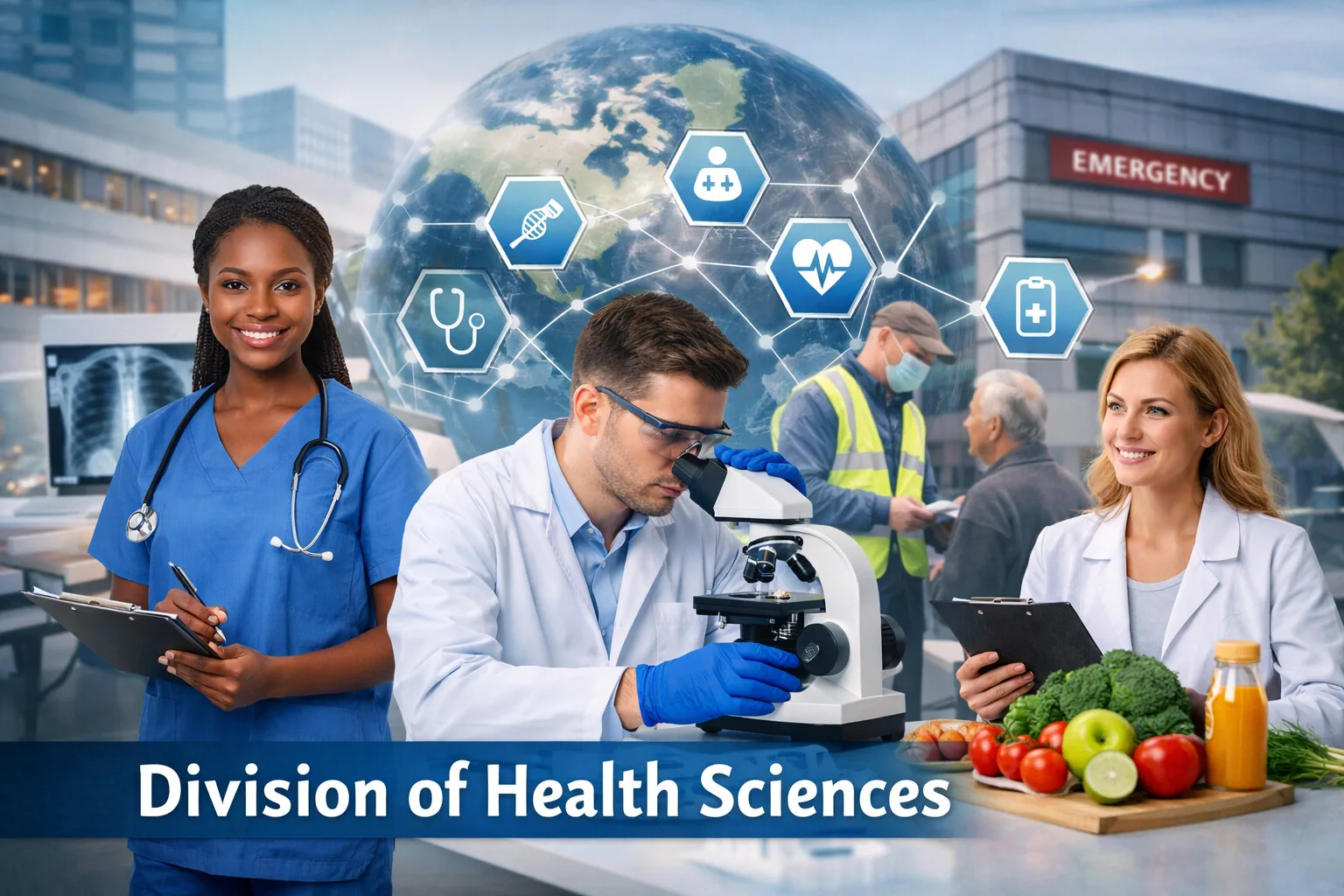
The division of health sciences focuses on improving human health through education, research, and practical healthcare services. It covers medical support fields that work alongside doctors to prevent disease, diagnose conditions, and promote community wellness. This division prepares students for careers in healthcare systems, public health, clinical labs, and allied health professions. It plays a key role in modern healthcare by connecting science, patient care, and health policy in real-world settings.
Table of Contents
What Is the Division of Health Sciences?
The division of health sciences is an academic and professional field that studies health, disease prevention, healthcare delivery, and human well-being. Unlike traditional medicine, it focuses more on supportive, preventive, and diagnostic roles in healthcare.
This division exists in universities, medical colleges, and research institutions. Its goal is to train skilled professionals who support doctors, hospitals, clinics, and public health organizations.
Health sciences combine:
- Biological sciences
- Clinical practice
- Health education
- Community health
- Healthcare management
It bridges the gap between medical science and patient-centered care.
Core Departments Within the Division of Health Sciences
The division of health sciences includes several specialized departments. Each one focuses on a different aspect of healthcare delivery.
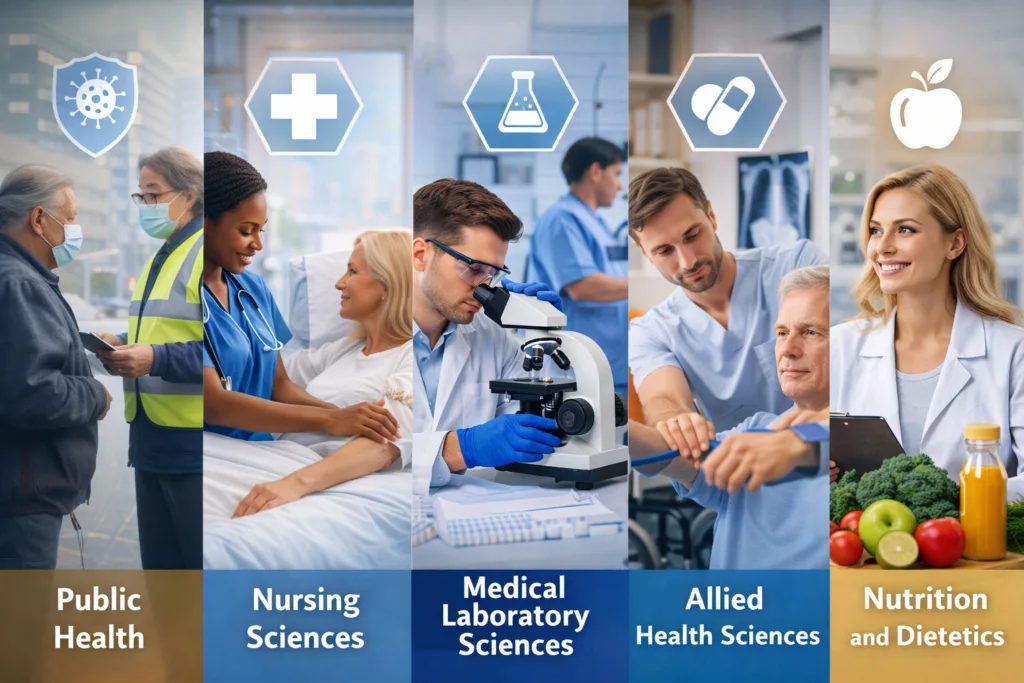
Public Health
Public Health focuses on protecting and improving the health of communities rather than treating individual patients. It works on preventing diseases before they start. Public health professionals study health trends, manage outbreaks, and educate people about healthy lifestyles.
Key areas include disease prevention, vaccination programs, sanitation, health awareness, and policy planning. Public health plays a major role during pandemics, natural disasters, and public health emergencies. Careers in this field include public health officers, epidemiologists, health educators, and policy advisors.
Key areas include:
- Epidemiology
- Environmental health
- Community health
- Health policy and management
Nursing Sciences
Nursing Sciences prepare students to provide direct patient care with skill, compassion, and responsibility. Nurses are the backbone of healthcare systems and work closely with doctors and patients.
This field covers patient assessment, clinical procedures, medication management, and patient safety. Nursing also focuses on ethics, communication, and emotional care. Graduates can work in hospitals, clinics, emergency units, and community health centers as registered nurses, nurse educators, or nursing supervisors.
This field emphasizes:
- Patient safety
- Clinical skills
- Ethics and compassion
- Evidence-based care
Medical Laboratory Sciences
Medical Laboratory Sciences focus on diagnosing diseases through laboratory testing. Lab professionals analyze blood, urine, tissues, and other samples to help doctors make accurate decisions.
This field is critical for detecting infections, monitoring chronic illnesses, and confirming medical conditions. Medical lab scientists work behind the scenes but play a vital role in patient care. Career options include clinical laboratory technologist, pathology assistant, and research lab analyst.
They support doctors by:
- Detecting infections
- Monitoring chronic diseases
- Ensuring accurate test results
Allied Health Sciences
Allied Health Sciences include healthcare professionals who support diagnosis, treatment, and rehabilitation but are not doctors or nurses. These professionals help patients recover, manage disabilities, and improve quality of life.
Fields under allied health include physiotherapy, radiology, occupational therapy, speech therapy, and medical imaging. Allied health professionals work in hospitals, rehab centers, and diagnostic labs. This field offers strong job demand and practical, hands-on careers.
Examples include:
- Physiotherapy
- Radiology technology
- Occupational therapy
- Speech therapy
Nutrition and Dietetics
Nutrition and Dietetics study the relationship between food, health, and disease. Nutritionists and dietitians help people improve their health through proper diet planning.
They work with patients suffering from diabetes, obesity, heart disease, and digestive issues. This field also focuses on public nutrition, sports nutrition, and food safety. Careers include clinical dietitian, nutrition consultant, public health nutritionist, and wellness coach.
They work in:
- Hospitals
- Fitness centers
- Public health programs
Academic Programs Offered
The division of health sciences offers a wide range of academic programs at different levels.
Undergraduate Programs
Bachelor-level programs focus on building strong foundations in health and biological sciences.
Common degrees include:
- Bachelor of Health Sciences
- BS Nursing
- BS Medical Laboratory Technology
- BS Public Health
Graduate Programs
Graduate programs provide advanced knowledge and specialization.
Popular options include:
- Master of Public Health (MPH)
- MSc Health Sciences
- MSN (Master of Science in Nursing)
Doctoral and Research Programs
PhD programs focus on research, innovation, and policy development. Graduates often work in academia or research institutions.
Importance of the Division of Health Sciences in Modern Healthcare
The division of health sciences is essential because modern healthcare relies on team-based care. Doctors cannot work alone.
Health science professionals:
- Improve patient outcomes
- Reduce healthcare costs
- Promote preventive care
- Support healthcare systems
This division also plays a major role during health crises, such as pandemics and natural disasters.
Skills Students Gain in Health Sciences
Students in the division of health sciences develop both technical and soft skills.
Key skills include:
- Clinical and laboratory skills
- Critical thinking
- Communication skills
- Ethical decision-making
- Data analysis
These skills are valuable in both healthcare and research careers.
Career Opportunities After Health Sciences
Graduates from the division of health sciences have strong job prospects worldwide.
Career paths include:
- Public health officer
- Registered nurse
- Medical lab technologist
- Health educator
- Hospital administrator
- Research assistant
Many roles offer job stability and career growth.
Role of Research and Innovation in Health Sciences
Research is a core part of the division of health sciences. It helps improve healthcare practices and patient safety.
Research areas include:
- Disease prevention
- Health technology
- Clinical trials
- Healthcare policy
Innovation in health sciences leads to better treatments and improved public health strategies.
Admission Requirements and Eligibility
Admission criteria vary by institution and program.
General requirements include:
- Science background (biology, chemistry)
- Minimum GPA or marks
- Entry tests or interviews
Some programs also require clinical experience or internships.
Difference Between Health Sciences and Medical Sciences
Many students confuse health sciences with medical sciences.
| Health Sciences | Medical Sciences |
| Focus on support and prevention | Focus on diagnosis and treatment |
| Team-based roles | Doctor-centered roles |
| Shorter training duration | Long medical education |
| Wider career options | Limited to clinical practice |
Both fields are important but serve different purposes.
Global Scope and Future of Health Sciences
The demand for health science professionals is growing worldwide. Aging populations and rising health challenges increase the need for skilled workers.
Future trends include:
- Digital health
- Telemedicine
- Preventive healthcare
- Health data analytics
The division of health sciences is expected to expand rapidly.
Common Challenges Faced by Health Sciences Students
While rewarding, health sciences education can be demanding.
Common challenges include:
- Heavy coursework
- Clinical pressure
- Time management
- Emotional stress
Strong motivation and proper planning help overcome these challenges.
Why Choose a Career in Health Sciences?
Health sciences offer meaningful careers that directly impact lives. Professionals enjoy respect, stability, and personal satisfaction.
Reasons to choose this field:
- Help others
- Job security
- Global opportunities
- Continuous learning
It is ideal for students who want to serve society without becoming doctors.
Final Thoughts
The division of health sciences is a vital part of the healthcare system. It trains professionals who support patient care, public health, and medical research. With diverse programs and strong career prospects, this field offers both personal fulfillment and professional growth. As healthcare continues to evolve, health sciences will remain central to improving lives and building healthier communities worldwide.
FAQs
1. What is the division of health sciences?
The division of health sciences is an academic field that focuses on healthcare support, disease prevention, and health promotion. It trains professionals who work alongside doctors in hospitals, labs, and public health organizations.
2. What subjects are included in health sciences?
Health sciences include subjects like public health, nursing, medical laboratory sciences, nutrition, physiotherapy, radiology, and other allied health fields related to patient care and diagnostics.
3. Is health sciences the same as medical science?
No. Health sciences focus on preventive care, diagnostics, and healthcare support roles, while medical sciences focus mainly on diagnosing and treating diseases as a doctor.
4. What careers can I choose after health sciences?
Graduates can work as nurses, lab technologists, public health officers, health educators, physiotherapists, researchers, or healthcare administrators.
5. Is the division of health sciences a good career choice?
Yes. It offers strong job demand, career stability, global opportunities, and the chance to work directly in healthcare without becoming a doctor.
6. What qualifications are needed to study health sciences?
Most programs require a science background, usually with biology and chemistry, along with minimum academic scores set by the institution.
7. How long does it take to complete a health sciences degree?
Undergraduate programs usually take 3 to 4 years. Master’s programs take 1 to 2 years, depending on specialization.
8. Can health sciences graduates work abroad?
Yes. Many health science degrees are internationally recognized, allowing graduates to work in hospitals, labs, NGOs, and public health systems worldwide.
9. Do health sciences involve clinical training?
Yes. Most programs include hands-on clinical training, lab work, or internships to prepare students for real healthcare environments.
10. What is the future scope of the division of health sciences?
The future is strong due to rising healthcare needs, aging populations, and growth in preventive care, digital health, and public health services.