
How to Check Engine Oil: best guide
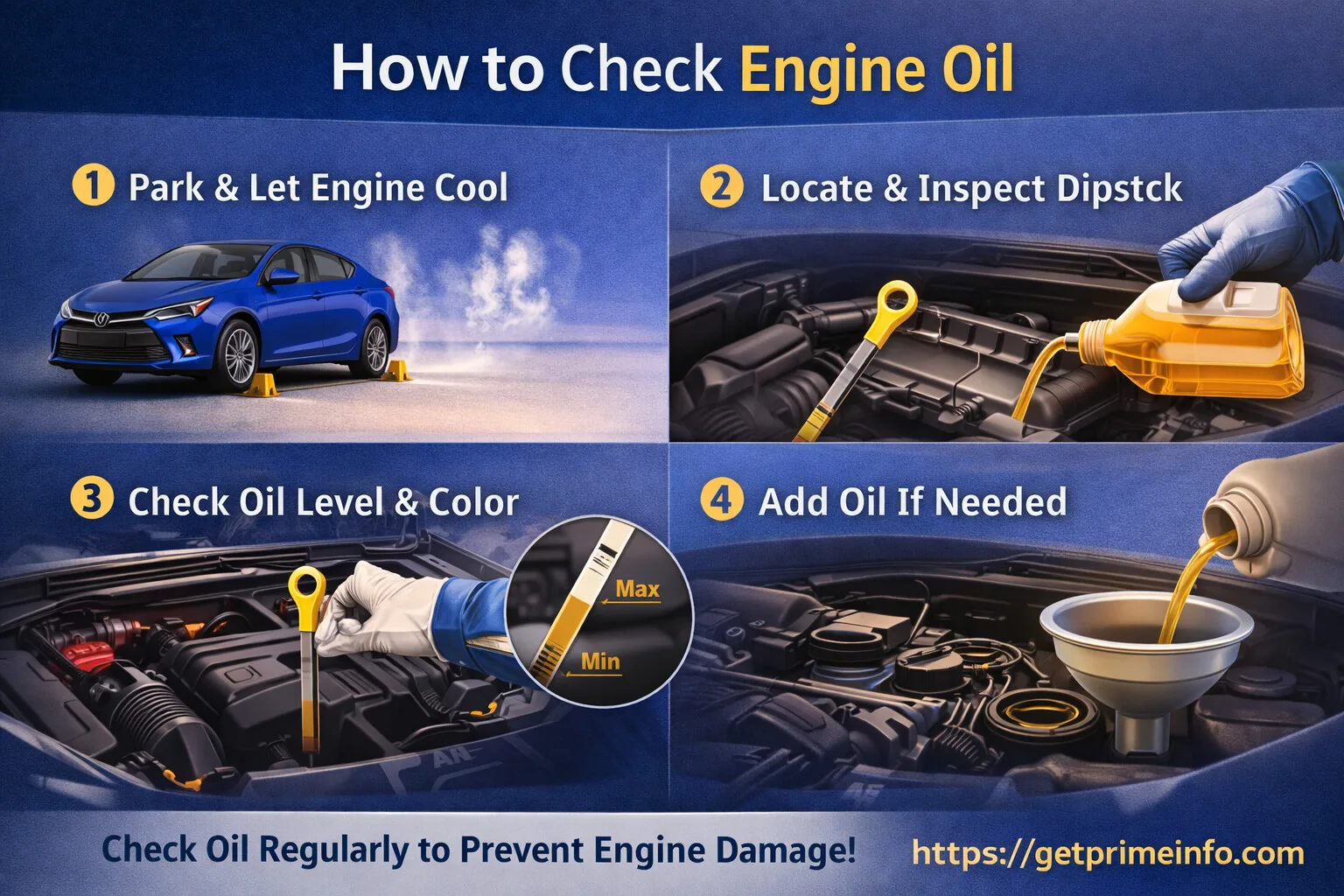
How to check engine oil is one of the easiest and most important car maintenance tasks you can do yourself. It helps protect your engine, improve performance, and prevent costly damage. Checking engine oil takes only a few minutes and does not require tools or mechanical skills. When done regularly, it ensures your engine has the right oil level and quality to stay healthy, efficient, and long-lasting.
Table of Contents
Why You Should Check and Change Your Engine Oil Regularly
Engine oil keeps your car running smoothly. It lubricates moving parts, reduces heat, and prevents metal damage. Over time, oil breaks down and collects dirt. When oil becomes dirty or low, it can no longer protect the engine properly.
Regular oil checks help you spot problems early. Low oil levels can cause overheating. Dirty oil can lead to engine wear. Both issues reduce engine life and increase repair costs. Checking oil often helps avoid these risks and keeps your car reliable.
How Often Should You Check Your Engine Oil?
Most experts recommend checking your engine oil once a month. You should also inspect it before long trips or if your car feels different while driving. Older vehicles may need more frequent checks because they can burn oil faster or develop small leaks over time. Regular oil checks also support early oil leak detection, as sudden drops in oil level can indicate hidden leaks or seal damage.
Newer cars with modern engines still require routine oil inspections. Even advanced engines can lose oil slowly due to minor seepage or pressure-related issues. Making oil checks a habit not only helps with timely oil leak detection but also prevents unexpected breakdowns and keeps your engine protected throughout the year.
Step-by-Step Guide: How to Check Engine Oil Correctly
Checking engine oil is simple and safe if you follow these steps carefully.
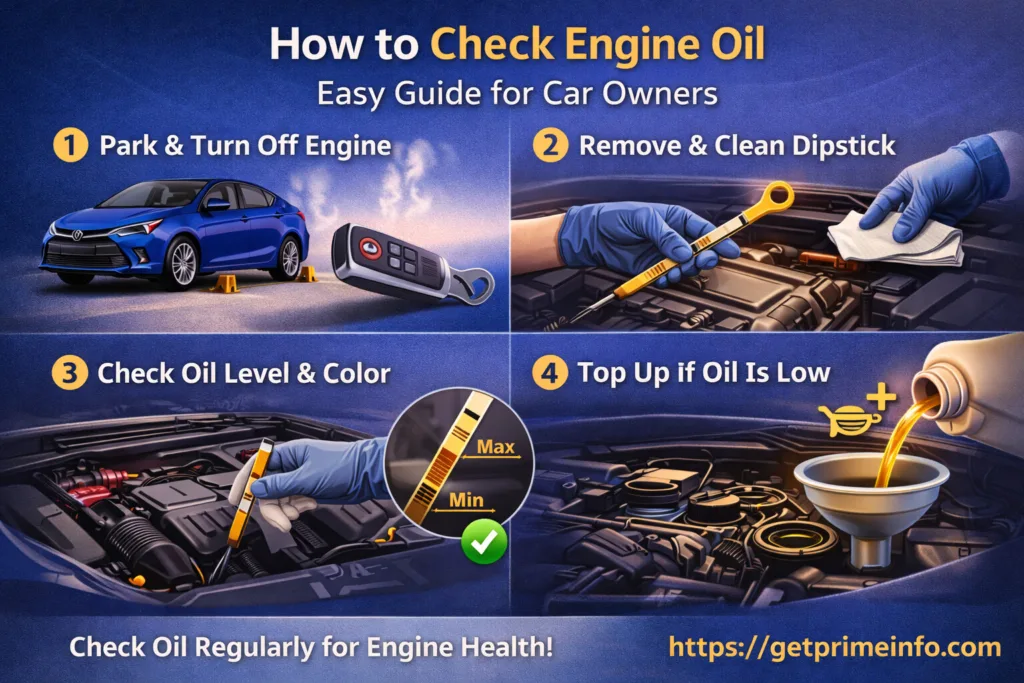
Step 1: Park on a Level Surface
Make sure your car is parked on flat ground. This helps ensure an accurate reading. If the car is tilted, the oil may settle unevenly, giving you misleading results.
Step 2: Turn Off the Engine and Let It Cool
Switch off the engine and wait about 5–10 minutes. This allows the oil to drain back into the oil pan. Checking immediately after driving can result in an incorrect level reading and increases the risk of burns.
Step 3: Open the Hood and Find the Dipstick
Pop the hood and locate the dipstick. It usually has a bright handle—often yellow or orange—and is labeled clearly. If you’re unsure, your vehicle’s owner manual can point it out quickly.
Step 4: Remove and Clean the Dipstick
Pull the dipstick out completely and wipe it clean with your rag or paper towel. This step is important because oil splashed inside the engine can distort the first reading.
Step 5: Reinsert and Remove Again
Slide the dipstick all the way back in, then pull it out once more. Hold it horizontally and look at the oil level.
Most dipsticks have two marks:
- Minimum (Low)
- Maximum (Full)
The oil should fall between these two points.
Step 6: Check Oil Color and Texture
While you’re there, take a moment to examine the oil:
- Clean oil is usually amber or light brown
- Very dark, gritty, or thick oil may indicate it’s time for a change
Milky or foamy oil can signal a serious issue and should be checked by a professional.
Step 7: Add Oil if Needed
If the level is below the recommended range, add the correct type of oil slowly. Pour a small amount at a time, wait a minute, then recheck the level. Overfilling can be just as harmful as running low.
How Often Should You Check?
A good rule of thumb is to check your oil at least once a month or before long trips. Older vehicles may need more frequent checks. If you use these tools, it is best for you and your health.
Engine Oil Checking Tools: A Simple Guide
Checking your engine oil is easy when you have the right tools. These tools help you measure oil level, check oil condition, and avoid engine damage. Some tools come built into the car, while others are optional but useful for regular maintenance. Using proper oil-checking tools ensures your engine stays well-lubricated and runs smoothly.
Modern vehicles may use digital systems, but traditional tools are still reliable and widely used. Knowing how each tool works can save time and prevent costly repairs.
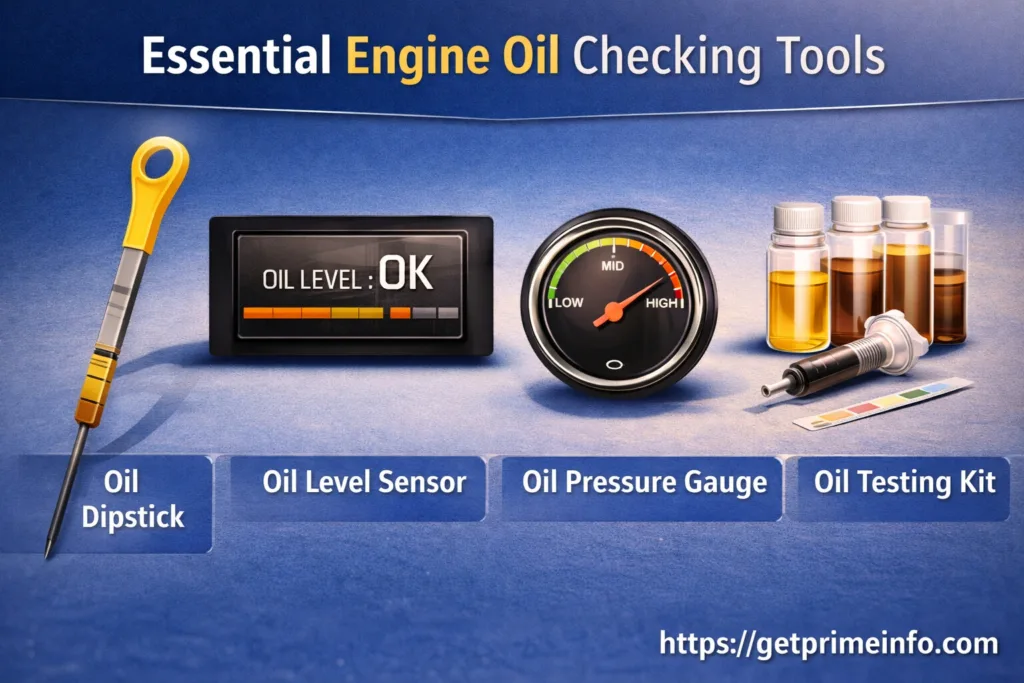
Common Engine Oil Checking Tools
The oil dipstick is the most basic and commonly used tool. It comes installed in most cars and allows you to check oil level and color manually. By pulling it out, wiping it clean, and reinserting it, you can see whether oil is low, dirty, or healthy.
An oil level sensor is found in many newer vehicles. It measures oil electronically and shows the level on the dashboard or infotainment screen. While convenient, it should still be checked occasionally against manual readings for accuracy.
An oil pressure gauge helps monitor oil flow while the engine is running. Low oil pressure can indicate leaks, low oil level, or internal engine problems.
Some drivers also use oil testing kits. These kits help analyze oil condition, especially for older engines or high-mileage vehicles. They can detect contamination or breakdown in oil quality.
Helpful Engine Checking Oil Tools
| Tool Name | Purpose | Best For | Found In |
| Oil Dipstick | Check oil level and color | All vehicles | Built-in |
| Oil Level Sensor | Digital oil level reading | Modern cars | Built-in |
| Oil Pressure Gauge | Monitor oil pressure | Performance monitoring | Optional |
| Oil Testing Kit | Analyze oil condition | High-mileage engines | External |
Engine Oil Checking Guide for Popular & Luxury Cars
Bugatti (Chiron / Veyron)
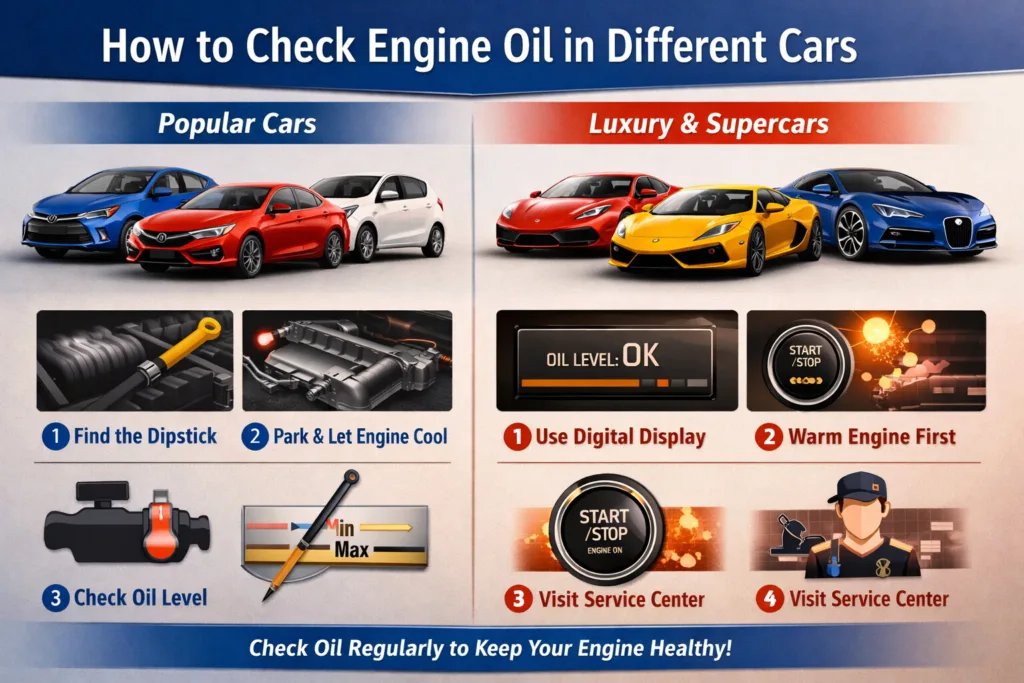
Checking engine oil in a Bugatti is very different from regular cars. Most Bugatti models do not have a traditional dipstick. Oil level is checked electronically through the vehicle’s digital system. The car must be on level ground, at a specific temperature, and checked by an authorized service center for accurate readings.
Lamborghini (Huracán / Aventador)
Lamborghini cars often use electronic oil level monitoring instead of a dipstick. To check engine oil, start the car, let it warm up, and access the oil level reading through the dashboard menu. Because of the complex engine design, Lamborghini recommends professional inspection rather than manual oil checks.
Ferrari (488 / F8 / Roma)
Most modern Ferrari models include a digital oil measurement system. The oil level can be checked through the infotainment screen when the engine reaches operating temperature. Older Ferrari models may have a dipstick, but the process requires precision and should be done carefully or by a trained technician.
McLaren (720S / Artura)
McLaren vehicles rely on electronic oil level sensors. The oil level is displayed on the dashboard or center screen after the engine warms up. McLaren strongly advises against manual oil checking and recommends regular inspections by certified service centers.
Toyota Corolla
To check engine oil in a Toyota Corolla, park the car on level ground and turn off the engine. Open the hood and locate the yellow oil dipstick. Pull it out, wipe it clean, reinsert it fully, then pull it out again to check the oil level between the marks.
Honda Civic
In a Honda Civic, let the engine cool for a few minutes before checking oil. Find the orange or yellow dipstick under the hood. Remove it, clean it, insert it again, and then read the oil level. Make sure it is not below the minimum mark.
Suzuki Alto
For the Suzuki Alto, checking engine oil is simple. Open the hood and locate the dipstick near the engine block. Pull it out, wipe it, insert it again, and check the oil level. Add oil if the level is low.
Toyota Camry
To check oil in a Toyota Camry, park the car on a flat surface and turn off the engine. After waiting a few minutes, pull out the dipstick, clean it, and reinsert it. The oil should be near the full mark for best performance.
Hyundai Elantra
In a Hyundai Elantra, open the hood and locate the oil dipstick, usually marked with a bright handle. Remove it, wipe it clean, reinsert it fully, and check the oil level. Also check oil color for signs of dirt.
Kia Sportage
For the Kia Sportage, make sure the engine is warm but turned off. Pull out the dipstick, wipe it clean, reinsert it, and remove it again to check the oil level. If oil is low, top it up using the recommended oil type.
What Colour Should Your Engine Oil Be?
Fresh engine oil is usually light amber or golden. As it ages, it becomes darker. Dark oil does not always mean bad oil, but thick, black oil with grit is a warning sign.
Milky or foamy oil may indicate coolant contamination. This can point to serious engine problems. If you notice unusual oil color or texture, it is best to have your car inspected by a professional.
How Long Does Engine Oil Last?
Engine oil life depends on the type of oil and driving conditions. Conventional oil usually lasts around 3,000 to 5,000 miles. Synthetic oil can last between 7,500 and 10,000 miles or more.
Short trips, heavy traffic, extreme temperatures, and towing reduce oil life. Always follow your vehicle manufacturer’s oil change recommendations for best results.
Which Kind of Engine Oil Should You Use?
Choosing the right engine oil is critical. Always check your car’s owner manual for the recommended oil type and viscosity. Using the wrong oil can harm your engine.
There are three main types of engine oil: conventional, synthetic blend, and full synthetic. Each serves different needs depending on engine design and driving habits.
| Type of Engine Oil | Description | Best For | Key Benefits |
|---|---|---|---|
| Mineral Oil | Made from refined crude oil with minimal additives. It is the most basic form of engine oil. | Older vehicles and low-performance engines | Affordable, suitable for simple engine designs |
| Synthetic Oil | Chemically engineered oil designed for high performance and extreme temperatures. | Modern cars, high-performance engines, and extreme driving conditions | Better engine protection, improved fuel efficiency, longer oil change intervals |
| Semi-Synthetic Oil | A blend of mineral and synthetic oils, offering balanced performance. | Mid-range vehicles and everyday driving | Good protection, better performance than mineral oil, cost-effective |
Advantages of Synthetic Engine Oil
Synthetic engine oil offers better protection than conventional oil. It flows better in cold weather and stays stable at high temperatures. This helps reduce engine wear and improve fuel efficiency.
Synthetic oil also lasts longer, meaning fewer oil changes. While it costs more upfront, it often saves money over time by protecting the engine and improving performance.
Step-by-Step Guide: How to Change or Top Up Car Engine Oil
To top up oil, first identify the correct oil type. Open the oil filler cap on the engine and add small amounts using a funnel. Check the dipstick after each addition to avoid overfilling.
Changing oil requires draining old oil, replacing the oil filter, and adding new oil. If you are unsure, it is safer to have a professional do a full oil change. Incorrect oil changes can cause leaks or engine damage.
What Happens If You Run Out of Engine Oil?
Running out of engine oil is extremely dangerous. Without oil, engine parts rub together without lubrication. This causes rapid overheating and severe damage.
In many cases, an engine can seize within minutes. Repairs are often expensive or impossible. Regular oil checks prevent this risk and protect your engine from failure.
How to Recycle and Dispose of Used Engine Oil
Used engine oil should never be poured down drains or onto the ground. It is harmful to the environment and illegal in many areas.
Most auto parts stores and service centers accept used oil for recycling. Store used oil in a sealed container and take it to an approved recycling location. Recycling oil helps protect nature and saves resources.
Signs Your Engine Oil Needs Attention
Your car may show warning signs when oil levels or quality are poor. The oil warning light on the dashboard is the most obvious sign. Strange engine noises, burning smells, or reduced performance can also indicate oil problems.
Ignoring these signs can lead to serious engine damage. Checking engine oil regularly helps you respond before problems get worse.
Common Mistakes to Avoid When Checking Engine Oil
Many drivers check oil when the engine is hot. This gives inaccurate readings. Always wait for the engine to cool.
Another mistake is overfilling oil. Too much oil can increase pressure and damage seals. Always add oil slowly and check levels often.
How Weather and Driving Habits Affect Engine Oil
Extreme heat breaks down oil faster. Cold weather thickens oil and reduces flow during startup. Short trips prevent oil from fully warming up, causing moisture buildup.
If you drive in harsh conditions, check your engine oil more often. Adjust oil change intervals based on how you drive, not just mileage.
Final Thoughts:
Knowing how to check engine oil gives you control over your car’s health. It saves money, prevents breakdowns, and extends engine life. Regular oil checks take only minutes but offer long-term benefits.
Make oil inspection part of your routine. Use the right oil, watch for warning signs, and never ignore low oil levels. A well-maintained engine runs smoother, lasts longer, and keeps you driving with confidence.
FAQs:
1. How do I check my engine oil correctly?
Park your car on level ground and turn off the engine. Wait 5–10 minutes so the oil settles. Pull out the dipstick, wipe it clean, insert it again, then remove it to check the oil level and color.
2. Should the engine be hot or cold when checking oil?
It is best to check engine oil when the engine is warm but turned off for a few minutes. This allows oil to settle while still giving an accurate reading.
3. How often should you check engine oil?
You should check your engine oil at least once a month. If your car is older or driven frequently, check it every two weeks.
4. What does low engine oil look like on the dipstick?
Low oil will fall below the minimum mark on the dipstick. If the level is low, you should add oil immediately to avoid engine damage.
5. What color should engine oil be?
Healthy engine oil is usually light brown or amber. Dark or black oil means it is dirty. Milky oil may indicate coolant contamination and needs inspection.
6. Can I check engine oil without a dipstick?
Yes, some modern cars use electronic oil sensors. You can check oil levels through the dashboard display or infotainment system, depending on your vehicle.
7. What happens if you drive with low engine oil?
Driving with low oil can cause engine overheating, increased friction, and serious internal damage. In extreme cases, it can lead to complete engine failure.
8. How much oil should be between dipstick marks?
The distance between the minimum and maximum marks usually equals about one quart (one liter). Always keep oil closer to the full mark without overfilling.
9. Can overfilling engine oil be harmful?
Yes, too much oil can create excess pressure, damage seals, and reduce engine efficiency. Always add oil slowly and recheck the level.
10. How do I know if my engine oil needs changing?
If oil looks very dark, smells burnt, or feels gritty, it likely needs changing. Also, follow your car manufacturer’s recommended oil change interval.