
Pentagon Big Tech Tesla Cybertruck 2026 What This Unusual Connection Really Means
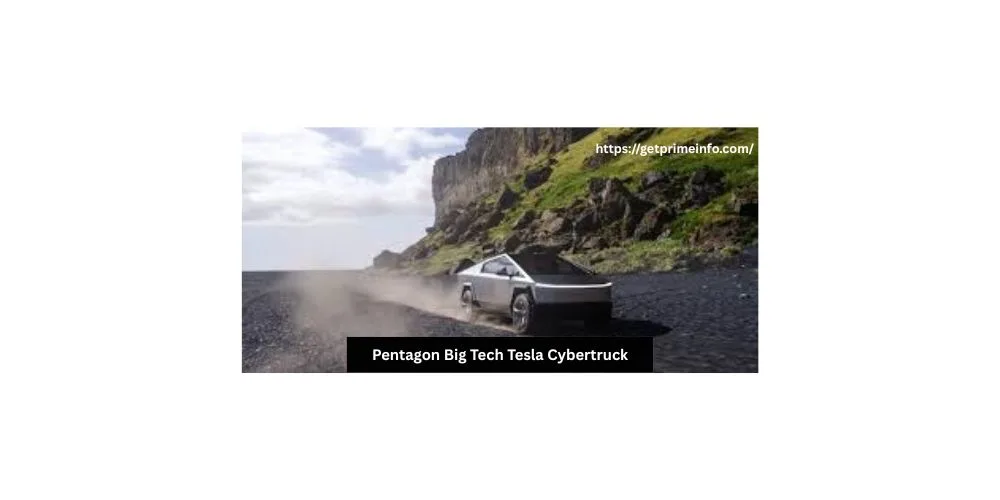
The Pentagon’s connection to Big Tech and Tesla’s Cybertruck reflects how modern warfare, defense planning, and technology are evolving rapidly. The U.S. military is now testing and purchasing commercial technology products, including Tesla Cybertrucks, for training, targeting, and evaluation purposes. This does not mean Tesla is building weapons. It shows how the Pentagon studies real-world vehicles to prepare for modern threats. The Cybertruck’s unique design, materials, and visibility make it useful for simulations, testing, and future defense planning.
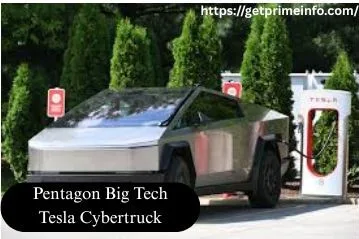
Table of Contents
Why the Pentagon Is Interested in Big Tech Vehicles Like Tesla Cybertruck
The Pentagon no longer relies only on traditional defense contractors. Modern conflicts involve civilian technology, commercial vehicles, and widely available platforms. Due to this shift, the U.S. military is studying popular products from Major Tech companies.
The Tesla Cybertruck stands out because it looks different from standard vehicles. Its sharp angles, stainless steel body, and electric platform make it a useful test object. The Pentagon wants to understand how such vehicles react to stress, impact, and targeting systems.
This interest does not mean partnership or endorsement. It means preparation.
U.S. Military Plans to Use Tesla Cybertrucks as Missile Targets
Recent reports suggest the U.S. Air Force explored buying Tesla Cybertrucks for target practice. These vehicles may be used as missile and weapons test targets, not combat tools.
Using real-world vehicles helps the military test accuracy and detection systems. The Cybertruck’s shape reflects future vehicle designs that may appear in conflict zones. Training with such targets improves readiness.
Military experts say this is about realism. Modern battlefields include civilian-style vehicles, not just tanks and armored trucks.

What This Says About the Pentagon and Big Tech Relationship
The Pentagon and Big Tech relationship is evolving. Instead of building everything from scratch, the military studies commercial products that already exist.
This approach saves time and money. It also reflects how technology spreads fast across borders. Electric vehicles, drones, and AI tools are now common worldwide.
Rlated post : Do I need an antivirus for Android in 2026? A complete guide.
Experts say this shift shows the Pentagon adapting, not weakening. Understanding civilian tech helps prevent surprises in future conflicts.
Tesla Cybertruck’s Design Makes It Useful for Military Testing
The Cybertruck’s design is unusual. Its flat surfaces, sharp edges, and stainless steel body behave differently under stress than traditional cars.
Tesla’s chief designer once accidentally cracked the Cybertruck’s “armor glass” during a public demo. While embarrassing at the time, it revealed how materials behave under force. Tesla later called it a strong marketing moment, but defense experts saw something else.
They saw data.
Testing how glass, steel, and angles react to impact helps military analysts refine detection and strike systems.
Cybertruck as a Symbol, Not a Weapon
It is important to be clear. The Tesla Cybertruck is not being turned into a military vehicle. It is not armed. It is not entering combat.
Instead, it is a symbol of how civilian technology shapes defense thinking. The Pentagon wants to be ready for vehicles that look nothing like military hardware.
This mindset helps avoid outdated strategies. Modern conflicts do not follow old rules.
Tesla’s Broader Challenges Add Context to the Pentagon Interest
Tesla is facing pressure in the global EV market. China’s BYD has officially passed Tesla in total EV sales. This marks a major shift in the industry.
Tesla’s sales have declined for two straight years. Elon Musk promised a major rebound in 2026, but competition is intense. Rivian’s CEO recently stated that mid-price EV sales are still dominated by Tesla, but the market is not healthy.
These struggles make the Cybertruck’s role even more interesting. While Tesla fights commercial battles, its products are being studied by the world’s most powerful military.
Cybertruck Fires and Attacks Raise Security Questions
Four Cybertrucks were damaged in a fire at a Seattle Tesla lot during ongoing attacks linked to anger toward Elon Musk. These incidents highlight growing risks around high-profile tech products.
From a defense perspective, this matters. Vehicles that attract attention can also become targets. Understanding how they burn, fail, or survive stress has value beyond civilian use.
The Pentagon studies real-world incidents carefully. Fires, sabotage, and vandalism offer lessons that simulations cannot.
Big Tech Products Are Now Part of Global Conflict Planning
The Pentagon is not alone. Militaries worldwide study commercial tech.
Ukraine now uses advanced air defense systems like the British Terrahawk Paladin, similar to Germany’s Skynex. Estonia has announced shoot-to-kill rules for masked border incursions. Drone warfare has changed everything.
Ukraine’s new shotgun drone shows how low-cost ideas can dominate the last meters of airspace. In this environment, civilian vehicles and tech platforms matter more than ever.
Big Tech is no longer neutral in global strategy, even if unintentionally.
Why Cybertruck Fits Modern Military Simulations
Modern warfare simulations focus on realism. That means testing systems against objects that resemble what appears on real streets.
Cybertrucks are large, reflective, electric, and visually distinct. They create radar and thermal patterns different from gas-powered vehicles. This makes them useful in sensor testing.
Training against realistic objects improves decision-making in real conflict situations.
The Pentagon’s Shift Away From Old Defense Models
For decades, defense planning relied on predictable tools. Tanks, jets, and ships dominated thinking. That era is fading.
Now, conflicts involve civilian infrastructure, mixed-use technology, and commercial platforms. The Pentagon’s interest in Tesla Cybertrucks reflects this reality.
It is not about Tesla. It is about adaptation.
Public Confusion Around Big Tech and Military Use
Many people misunderstand headlines. Seeing “Pentagon” and “Tesla Cybertruck” together creates fear or conspiracy theories.
In reality, governments regularly buy commercial products for testing. This includes trucks, phones, software, and drones. The difference now is visibility.
Tesla’s brand makes the story louder, not more dangerous.
How This Fits Into Global Defense Trends
Other nations are watching closely. China’s rapid industrial growth, Europe’s quiet defense upgrades, and Ukraine’s battlefield innovation all point in the same direction.
Civilian tech moves faster than military procurement. Studying it early gives an advantage.
The Pentagon knows this. That is why Big Tech products are now part of defense analysis.
Elon Musk’s Role Is Indirect, Not Strategic
Despite public perception, Elon Musk is not directing military use of the Cybertruck. There is no confirmed collaboration on weapons or combat systems.
Tesla sells vehicles. Governments decide how to study them.
Musk’s influence is cultural, not tactical.
Why This Matters to the Public
This story matters because it shows how everyday technology connects to global security. Cars, phones, and software are no longer just consumer tools.
Understanding this helps people separate fact from fear. It also shows why governments monitor trends closely.
The future of defense looks very different from the past.
Final Thoughts
The Pentagon Big Tech Tesla Cybertruck story is not about weapons or secret deals. It is about realism, preparation, and adaptation. The U.S. military studies commercial technology to understand modern threats, not to turn products into weapons. The Cybertruck’s design makes it useful for testing, but it remains a civilian vehicle. As Big Tech continues to shape daily life, it will also influence how nations prepare for future conflicts.
FAQs About Tesla Cybertruck
1. How much will a Tesla Cybertruck cost?
The Tesla Cybertruck price starts around $60,000 for the base version, while higher trims can exceed $90,000 depending on features, range, and performance options. Prices may change over time.
2. Which celebrity owns a Cybertruck?
Several celebrities have been linked to Cybertruck ownership or reservations. Notable names include Kim Kardashian, Pharrell Williams, and Shaquille O’Neal, though some reports are based on sightings rather than official confirmations.
3. What’s so special about the Tesla Cybertruck?
The Cybertruck stands out due to its stainless steel body, sharp angular design, electric drivetrain, and high durability claims. It looks unlike any traditional pickup truck on the market.
4. How many Cybertrucks have been sold in total?
Tesla has not released an exact public sales number. Estimates suggest tens of thousands of Cybertrucks have been delivered since production began, with more expected as manufacturing scales.
5. Does Lady Gaga own a Cybertruck?
There is no confirmed public evidence that Lady Gaga owns a Tesla Cybertruck. Online rumors exist, but Tesla and Lady Gaga have not verified this information.
6. Does Elon Musk only own 12.8% of Tesla?
Yes, Elon Musk owns roughly 12–13% of Tesla, making him the largest individual shareholder, even though he does not own a majority of the company.
7. Did Shaq sell his Cybertruck?
Shaquille O’Neal has owned several luxury and custom vehicles. Reports suggest he may have sold or replaced his Cybertruck, but exact details have not been officially confirmed.
8. Is the Cybertruck a hit or a flop?
The Cybertruck is commercially mixed but culturally impactful. While sales have faced delays and challenges, it remains one of the most talked-about electric vehicles in the world.
9. How many Cybertrucks did SpaceX buy?
There is no confirmed public number showing SpaceX purchasing Cybertrucks in bulk. Any claims about large SpaceX orders remain unverified.
10. What is the Tesla Cybertruck size?
The Cybertruck is about 231 inches long, 79 inches wide, and 75 inches tall, making it comparable in size to full-size pickup trucks like the Ford F-150.
11. What is the Tesla Cybertruck release date?
The Tesla Cybertruck officially began limited deliveries in late 2023, with broader production continuing into 2024 and beyond.
12. What does the Tesla Cybertruck interior look like?
The Cybertruck interior features a minimalist design, a large central touchscreen, spacious seating, durable materials, and a futuristic dashboard layout with fewer physical buttons.
13. Is the Tesla Cybertruck bulletproof?
The Cybertruck’s stainless steel body is highly durable, but it is not fully bulletproof. Tesla has stated it offers increased resistance, not military-grade armor.
14. How fast is the Tesla Cybertruck?
Depending on the version, the Cybertruck can accelerate from 0 to 60 mph in about 2.6 to 4.1 seconds, which is extremely fast for a pickup truck.
15. Why is the Pentagon interested in the Cybertruck?
The Pentagon is interested in the Cybertruck for testing and evaluation purposes, not combat use. Its unique design helps the military study modern vehicle materials and shapes.